
 Wilda Anagal
US EPA Office of Air & Radiation
Washington, DC
Yá’át’ééh, my name is Wilda Anagal, I am of the Bitter Water clan born for the Black Sheep clan. My maternal grandparents are of the One Who Walks Around clan and my paternal grandparents are of the Mexican People clan. I am originally from Black Mesa, Arizona. In 2014, I received my BS in Environmental Science with an emphasis in Biology from Northern Arizona University. I am currently a graduate student in the PSM Climate Science and Solutions program at Northern Arizona University. My internship with the U.S. EPA Office of Air and Radiation has been a great experience and has expanded my knowledge in Tribal Policy and Tribal Air programs. The internship has also allowed me to learn what skills I need to enhance and it definitely has allowed me to strengthen my foundation of my future career. Upon accepting the internship offer, I was undecided which PhD program I want to pursue, now I decided that I would like to receive a PhD in Public Administration. Other than defining my educational goals, I have been inspired to work with EPA in the future. Interning in Washington, DC. I have realized that I could have a greater impact working with over 500 Tribes across the U.S. The internship has allowed me to recognize my passion and gives me motivation to succeed in the future both academically and professionally.
 Nicole Forbes
University of Alaska Fairbanks
Fairbanks, AK
Graduating college, though it is a monumental achievement, can be daunting. College can feel like being in a bubble from the rest of the world; your studies come first and everything else comes second. However, when you graduate, that bubble pops and the real world is suddenly very real. With graduation looming ahead of me after five years of school, I was quite unsure of where my path would take me. Did I want to go to graduate school? Did I want to get a job? What kind of job did I want? One thing that I was certain of was that I wanted to travel and get outside of Texas. I received an email from one of my professors at Texas A&M about internships with ITEP. I saw that there were a variety of internship positions in a variety of locations. I decided to apply, thinking that a two month internship would give me plenty of time to really think about what I wanted to do and give me some experience in my field. I ended up being offered an internship in Alaska that was exactly what I was looking for: research based with field and lab work along with some travel in Alaska. I spent two wonderful months working in the numerous labs, analyzing data, and even travelling to a remote village to complete some fieldwork.
However, though the work was incredible, that was not the best part of the internship. This internship provided me with insight to the real world and what I wanted my position in it to be. This lead to me deciding that I loved Alaska and working for Indian tribes in relation to environmental issues. I am now moving to Ketchikan, Alaska to work as the Environmental Specialist for the Indian community. I highly recommend ITEP internships not only for the amazing work you will get to do, the incredible people you will meet, and the wonderful places you will go, but also the opportunities that may come as the result of your experience.
 Emily Fortier
Tribal Healthy Homes Network
Marysville, WA
My name is Emily Fortier and I am a senior at Ole Miss majoring in anthropology and minoring in chemistry, with a drive and passion for public health. This summer I worked as an ITEP intern with the Tribal Healthy Homes Network in Marysville, Washington. My work this summer focused on indoor air quality in the homes on the Tulalip reservation, where I assisted in conducting healthy homes assessments to address indoor air conditions that could adversely impact occupants with asthma, lung disease or compromised immune function. I also spent time shadowing tribal housing inspectors to learn what information is most useful and how parts or pieces of a Healthy Homes assessment can be integrated into a standard home inspection. To expand my research outside of just Tulalip, I also conducted an indoor air quality survey of tribal housing departments from each of the EPA’s 10 regions. My survey was important in identifying current indoor air quality procedures and practices integrated into tribal housing inspections, as well as the knowledge, perceptions and barriers around indoor air quality as a necessary component of inspections.
I aspire to work in a career in public health because of the opportunity to apply science and humanities in a way that positively impacts the health and well-being of everyone. Working with ITEP and Tribal Healthy Homes has been such a great experience because it allowed me to work the science side of public health by working with mold and moisture issues in homes, and the humanities side in working with and for people who are suffering due to poor indoor air quality. Having the opportunity to learn and grow surrounded by such supportive colleagues has been the best way I could have spent my summer.
 Autumn Harry
US EPA Region 10 Alaska Operations Office
Anchorage, AK
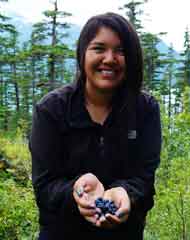
My name is Autumn Harry. I am currently a senior at the University of Nevada, Reno majoring in Environmental Science. This summer I interned with The Environmental Protection Agency (EPA) Region 10- Alaska Operations Office in Anchorage, Alaska.
EPA is providing assistance to help three Federally Recognized Alaska Native Tribes address current and future climate change impacts on their communities. Shishmaref, Shaktoolik, and Newtok are located within the Western coast of Alaska and are experiencing significant climate change impacts such as coastal erosion, increase in severe storms, and flooding.
Beginning in October of 2016, the Alaska Native Tribal Health Consortium (ANTHC) in partnership with EPA, through a grant, will conduct Healthy Homes Assessments within Shishmaref, Shaktoolik, and Newtok. My project involved partnering with ANTHC to help develop an expanded Healthy Homes Assessment tool to include other climate change impacts and concerns. The purpose of an expanded assessment will help to increase awareness of climate change impacts within Rural Alaskan communities.
Towards the end of my internship, I developed an example of an expanded assessment. The information I gathered for my report was based on Tribal documents, Tribal EPA IGAP project plans, and engaging directly with community members. This expanded assessment could potentially provide helpful data on how individual homes are being impacted by changes in climate, especially in at-risk communities. If successful, this could potentially be a good model for other communities who are experiencing climate change impacts. This would be one way to get household level impacts associated with climate change and would be an important step in an integrated community environmental response, whether they are working to protect water supplies, develop capacity for emergency response in individual homes, improving housing conditions, or improving food security.
 Stephen Hilton
Big Pine Paiute Tribe of the Owens Valley, Environmental Department
Big Pine, CA
I remember having a horrible realization: my time in college would end. All I could think about were times when people told me that college was the best time of their life and how they wished they never left. I had no idea what a full time job would be like or what people actually did when they weren’t in college. I needed an internship.
I looked at my college’s job finder, which I don’t think realized what my degree was because the top recommendation was “grief counselor”. I looked at internships that I heard about from others. Then one day I saw a forwarded email from the Institute of Tribal Environmental Professionals. I ended up interning with the Big Pine Paiute Tribe of the Owens Valley, which was having serious troubles with water rights and dust emissions due to water diversions and pumping to the LA aqueduct. Basically everything that I knew about the situation before came from the fact that I saw Chinatown once while I was busy. What I learned was much more than that (terrific) movie taught me.
In addition to getting a chance to live in a beautiful place that was not flat and humid, I experienced firsthand the resource struggles and environmental injustices many people have to go through. I got a glimpse of life on a reservation. I saw how one big decision (as well as others) affected almost every part of the Paiute’s lives and gained perspective on the struggles of many people. I witnessed how vulnerable places were that depended on diminishing snow and glacial melt were to climate change.
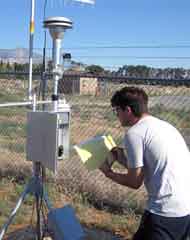
I learned many of the tasks a career in my field would entail. I spent time testing for particulate matter and considering meteorological trends. I went hiking. I applied my knowledge of climate change to a new area and a unique community. I went hiking. I put both the knowledge I had learned over my lifetime and my personality into outreach activities. I went hiking. I went to meetings and did many things that I might end up doing in the future. Like hiking.
Most importantly, this internship showed me how actions may have long lasting negative repercussions for others, which is a lesson anyone involved in environmental and natural resource management needs to learn.
 Shundene Key
Nez Perce Tribe ERWM Air Quality Program
Lapwai, ID
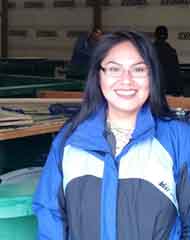
The interest of mine this summer has been how to make a connection, in American Indian communities, in a manner that includes western science and traditional knowledge. I have been able to use my creativity and interests to do outreach in Lapwai. Included was doing presentations for five weeks at the Boys & Girls Club, attending the Clearwater Sixth Grade Forestry Tour, and community events. At these places I had the opportunity to get to know community members, network with professionals, and learn about indoor and outdoor air quality.
Travelling throughout the Nez Perce community has been a motivator for my environmental enthusiasm. Watching the changes being made for air quality in homes by community members has been extraordinary to witness. Seeing grandmas make their own cleaning supplies, parents making changes to their homes to help make it a safe space for their child with asthma, and kids giggling every time they say ozone. The term, cultural exchange, is an understatement of the connections made on these beautiful lands. I have boundless hopes for the wellbeing of the Nimiipuu people. This summer has been a tremendous learning experience and I will take this optimism and apply it in my own community. It was the best summer I have had, also I hope each intern will have the same opportunity and outlook.
 Rachel LaMantia
Honor the Earth
Callaway, MN
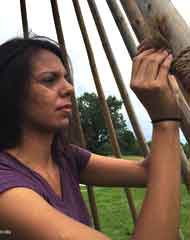
I found myself performing a wide array of activities and projects as an intern for Honor the Earth under Winona LaDuke the founder of the organization in 1993. A couple weeks after my arrival to the White Earth reservation, home to the Anishinaabe people in Minnesota, the 4th Annual Love Water Not Oil Tour was about to begin, a spiritual 2-week horseback journey along the route of the proposed Sandpiper and Line 3 pipelines. It was during this tour that I learned a new set of skills that I never thought I would learn, from shoveling up horse poop to setting up a teepee.
The remainder of my internship work focused on making the villages on the White Earth reservation not only beautiful, but energy efficient, leading to the path of mino bimaatiziiwin…the good life. It all begins in Pine Point and is defined by three main items of focus: Solar, Local Manufacturing and Production, and Art. It is here that I was able to attend the third solar thermal panel install, perform site assessments, create a mock-up for solar on the Pine Point School, identify possible solar farm locations, conduct a climate report, research a design for a manufacturing—solar panels, hemp for silk screening and community sewing—building weaving traditional Ojibwe Wigwam housing strategies with modern strategies fit to the environment, and assisting artists in painting murals on the houses in Pine Point.
This internship has given me real life experience that has not only broadened my skill set, but has given me more awareness of the issues that we as Native Americans face, and the role we play in protecting our planet. There is great importance and value in living sustainably, and is what I envision myself doing in all aspects from here on out. Miigwech for this opportunity.
 Michelle Phalen
Alutiiq Tribe of Old Harbor
Old Harbor, AK
I am entering my senior year at the University of Michigan where I am studying Spanish and International Studies with a focus in Global Environment and Health. This summer, I was an intern at the Old Harbor Tribal Office in Old Harbor, Alaska. I am interested in public health, environmental justice issues, and how people interact with the environment, and this internship allowed me to combine all of my interests. My internship focused on raising awareness about indoor air quality and doing outreach through community events, which were directed towards both youth and adults. In addition to planning community events, I wrote several articles for the community’s environmental newsletter, produced informational materials to distribute to community members, conducted home assessments in several homes and provided homeowners with individualized recommendations, and wrote a grant proposal to request funding to purchase indoor air monitoring equipment to conduct more thorough home assessments. Throughout my internship, I spent time with community members and learned more about their needs and concerns. In addition to addressing indoor air quality concerns, I learned how Tribes function.
As an intern, I had a variety of assignments, which provided me with a broad range of skills and experiences. My experience in Old Harbor made me recognize the importance of raising awareness about indoor air quality because many people are unfamiliar with indoor air pollutants. I am happy to have shared what I learned with the people of Old Harbor, and I am eager to implement when I have learned in my own community as well.
In addition to professional and educational experiences, this internship allowed me to experience many adventures. Living in a Native Alaskan village for two months was a unique and wonderful experience, and I had the opportunity to hike, camp, fish, swim, pick berries, and explore beaches. I spent much time with the people in Old Harbor and enjoyed creating relationships with them, and I also enjoyed learning about Alutiiq culture. I am extremely grateful to have had this experience.
 Natalia Shaw
Port Gamble S’Klallam Tribe Natural Resources Department
Kingston, WA
Boozhoo! Hello! My name is Natalia Shaw and this past summer I was an ITEP intern for the Port Gamble S’Klallam Tribe Natural Resources in Washington State. My main tasks as an intern focused on indoor air quality and climate change work. Some of my day to day tasks included: coordinating meetings with the health housing tribal departments to discuss indoor air quality concerns within the community, creating educational materials, distributing and collecting surveys to tribal employees, engaging in conference calls with representatives from the American Lung Association, planning and putting together an indoor air quality training for employees, researching different methods for measuring sea level rise and applying in to the local area, meanwhile working with experienced staff from different organizations, and networking with environmental scientists form different tribes. This was my second summer as an ITEP intern, and I chose to apply to be an ITEP intern for a second time because of the great experience, basis for acquiring applicable knowledge, networking opportunities, and relationship building opportunities I had. As an environmental science major, and native person, one of my career goals is to help tribes advance their environmental programing in order to increase sustainability and community health. ITEP has provided me with great experience in which I have had an opportunity to learn, first-hand, about working for an environmental office, doing field work, engaging and involving community members, education and outreach, and how to build partnerships with other environmental organizations. As an ITEP intern you are not doing work that involves filing papers, organizing files etc. you are doing work that will give you experience in working for tribal or non-tribal organizations, and while you work you have the opportunity to learn how to work independently and with co-workers, and community members. ITEP is a great internship for anyone who is interested in gaining work experience, especially those interested in public health or environmental science and working with tribal communities.
 Chanelle Tilden
Navajo Nation Environmental Protection Agency Air Quality Control Program
Fort Defiance, AZ
Shi ei Tsinaajinnie nishli doo Naaneshtazhi Tachiinii bashishchiin. Naakai Dine’e ei da shi cheii doo Tabaahi ei da shinali. Chanelle Tilden yinishye. A’koteego Dine’ nishli. I graduated from Arizona State University in fall 2015, and spent spring 2016 in Washington DC doing an internship in the Office of Environmental Justice at USEPA. Making that transition from USEPA to the Navajo Nation EPA in the Air Quality Control Program has been, by far, such an amazing experience. I went from working with the Tribal Program Manager at USEPA HQ learning about tribal environmental programs, tribal policies, and environmental justice issues that affect not only indigenous people in the United States, but indigenous people in other countries as well to actually working for a tribal environmental program for my tribe, learning about our own policies and regulations, and most importantly, doing outreach in communities that I grew up in.
As an intern here, I got to travel to each of our monitoring sites, one in AZ and two in NM, where I learned about how our air monitors work and how to calibrate them. I also got to go on a water sampling trip with the NNEPA Water Management, which was such an unforgettable experience. I also got to take part in multiple outreach events in local communities at health and career fairs where I spoke to community members about the program. My main task for the entire summer was to create an outreach video addressing indoor air quality issues caused by wood stoves, that covered topics from stove maintenance to proper Burnwise techniques.
To anyone considering ITEP, or any internship, I would strongly encourage them to take advantage of the opportunity. Both internships I got to attend this year complimented each other so perfectly and have certainly affirmed for me that I am on the right path. I will continue to pursue environmental work, especially in ways that I can contribute to Indian Country, and I couldn’t be anymore grateful and happy with both experiences. A’hxehee, ITEP.
 Emmett Tsosie
GRIC
Sacaton, AZ
My experience here at the Gila River Indian Community Department of Environmental Quality in Sacaton, Arizona gave me an opportunity to excel at my writing and research skills, my environmental fieldwork skills, and expand on my sampling and processing skills in a laboratory setting. This was possible because I was able to participate in six (6) projects for this tribal entity during my 8-week 2016 ITEP summer internship.
This includes: 1.) Environmental evaluations on tribal and allotted lands throughout the community. Fieldwork includes; inspecting proposed sites for future development, documenting solid and hazardous waste concerns in these areas. 2.) Identifying climate change impacts, adaptive capacities, vulnerabilities, risks, and adaptation strategies within the community. Researching and developing a plan that will identify and evaluate the resources that are most vulnerable to climate change and those that can best address it. 3.) Developing and integrating a green building initiative, which is based on GRIC Resolution GR-141-15, which is part of an initiative the EPA Region 9 has offered enhanced coordination and support to the community specifically to advance the communities sustainability goals around building housing, energy, and transportation. 4.) Assist with ecosystems restoration in The Pee Posh Wetlands Ecological Characterization Project. The Pee Posh wetlands is being restored and protected so that future generations of Akimel O’odham (Pima) and Pee Posh (Maricopa) will have a chance to remain connected to these precious areas that do still remain. This project introduced me to a real world scenario of an ecosystems restoration project. How an ecological restoration project is accomplished in the field. 5.) Assist the GRIC DEQ Wildlife and Ecosystems Management Department in the surveillance of Aedes aegypti (mosquito). The primary objective of the Aedes aegypti surveillance and control is in response to the risk of introduction of dengue, chikungunya, Zika, and yellow fever viruses in the community, the prevention of the spread of these viruses. This project furthered my skills in a laboratory setting. Identification, sampling, and processing, of the Aedes aegypti mosquitoes. 6.) The GRIC DEQ Wildlife and Ecosystems Management Department winter bird count research- the research involved searching the departments winter bird count related documents from the years 1998-2015; locating files related to yearly bird count activities, checking all documents for information, raw bird count data, compiling new Excel spreadsheets, and furnishing a summary on the research and findings.
 Gabriella Frankhouser
Pueblo of Santa Ana Department of Natural Resources
Santa Ana Pueblo, NM
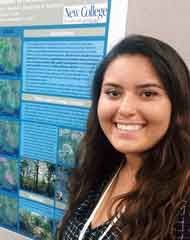
This summer I had the opportunity to intern under the supervision of Maxine Paul, the environmental program manager at the Department of Natural Resources (DNR) on the Santa Ana Pueblo in Bernalillo, New Mexico. My internship involved updating the Pueblo’s air quality report which was completed using state and national databases of air monitoring data. Some of this data is collected by the Environmental Protection Agency (EPA), and some is collected by state-run agencies, such as the New Mexico Environment Department (NMED). Throughout the summer I studied intricacies of the clean air act, how it’s changed over time, and the infrastructure in place now to support National Ambient Air Quality Standards (NAAQS). I also compiled data for the different criteria air pollutants over the past fifteen years, (2000-2015). The work I did was somewhat of a continuation from a report written in 2000 where there was actual onsite monitoring being done by the DNR. This was a fantastic internship and I learned so much more than I ever expected to.
In addition to updating the Pueblo’s air quality report, I have had several opportunities to work with other DNR employees and programs within the Pueblo. Some of these outside experiences include participating in the Pueblo’s hydrology summer camp camping trip to Jemez Springs, as well as participating in macroinvertebrate sampling in the Rio Grande with the DNR’s Water Resources Division. While these activities have only taken up a small fraction of my time in the Pueblo, they have provided me a greater understanding of how the Department of Natural Resources functions, and how each employee is really a part of a greater team of folks working on a variety of projects. I would suggest this internship to anyone who has a passion for the environmental sciences and wants to gain experience in the natural resource management field.
 Kelly Anderson
EPA OAR Tribal Air Program, Washington D.C.
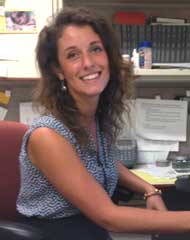
I am an undergraduate student in Environmental Science and International Relations at the University of San Diego. My internship was at the EPA Office of Air and Radiation, Tribal Air Program, in Washington D.C. I organized and presented an educational session directed at 35-40 EPA OAR employees on consultation, treaties, and environmental justice and how EPA employees should approach these topics in relation to Tribes. I invited another ITEP intern, as well as four other Tribal EPA interns, to participate in the presentation and to share their experiences. I also coordinated the program measures for the National Program Manager Guidance, State and Tribal Assistance Grants, and Indian Environmental General Assistance Program, to streamline the measuring strategies and to determine the best ways to measure the success of Tribal Air Programs. I compiled a comprehensive reference and guidance document that EPA employees will use to educate themselves on the specifics of the Tribal Air Program. I also drafted several formal communication efforts and participated in consultations with the Nez Perce and Navajo Nations and EPA administrative staff and attended the 2015 National Tribal Caucus Meetings.
At the conclusion of my internship, I gained a greater sense of self-confidence and a deeper understanding of the hurdles and environmental injustices Tribes face on a daily basis. I also gained an appreciation for the importance of cooperation between Tribes and EPA for the greater goal of improving public health through monitoring and improving air quality.
 Marquel A. Begay
U.S. EPA/OAR/OAQPS/OID/CTPG
Yá’át’ééh, shí éí Marquel Begay yinishyé. Shí Dine’é nishlí. Tséníjíkiní doon’é nishłįigo. Honágháahnii bashishchiin. Tł’iziłani éí dashicheii dóó Tábąąha éí dashinálí.
My name is Marquel Begay, and I am proud to say that I am Diné (Navajo). I am a member of the Honey-Combed Rock People, born for the One Who Walks Around clan. My maternal grandfather is of the Many Goats People and my paternal grandfather is of the Water Edge People. I am from Black Mesa, Arizona.
For the summer of 2015, I completed an eight-week internship with the U.S. Environmental Protection Agency (EPA), Office of Radiation (OAR) in Research Triangle Park, North Carolina. In particular, I assisted the Community and Tribal Programs Group (CTPG). CTPG focuses on working with tribes, Environmental Justice, and other communities to protect public health and the environment.
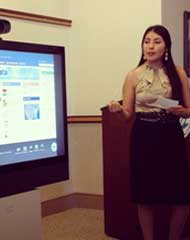
For the course of my internship, I conducted the Tribal Air Quality Monitor Study which is designed to identify the various types of air monitor networks operating within or near tribal areas in Indian Country. The study provides a GIS tool that consists of maps and data to further assist EPA in improving tribal air monitoring efforts.
I appreciate NTAA and ITEP for providing me the grand experience to intern with the U.S EPA OAR. Through my internship I gained great insight, worked on interesting projects, visited spectacular places, and created-life-long friendships. The internship has influenced my career path in becoming an environmental leader for my tribe in regards to environmental law, justice, and renewable energy development. I encourage individuals interested in tribal environmental issues to apply to various programs ITEP offers as it will provide an excellent experience for individuals to better understand the relationship between tribes, states, and the federal government, and how to make a difference within tribal communities.
 Jackson King Chastain
Nulato, Alaska
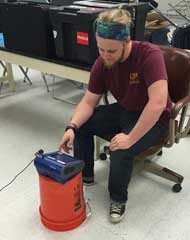
During this internship I experienced a ton of things. The first few weeks while I was in Nulato I was experiencing living in a small native village. As the weeks carried on I helped packaging up white goods and E‐waste to be back hauled out. I also was evacuated from Nulato because the forest fires that surrounded the town. Then I was transferred to Fairbanks to work at UAF and help with their research on road dust and the use of synthetic fluid palliatives in villages. While I was at UAF I learned how to use a DustTrak II aerosol monitor that I would use in back in Nulato to help monitor their problem of road dust. After my time in Fairbanks was up I was headed back to Nulato. The last few weeks I was here I started doing my air monitoring in 3 locations where many people pass by each day. Overall this internship was a great adventure, learning experience, and place to be located this summer.
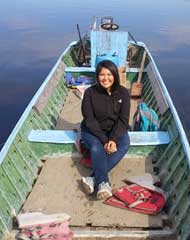 Autumn Harry
Tanana Chiefs Conference – Office of Environmental Health
I am an undergraduate student at University of Nevada, Reno where I am studying Environmental Science. This past summer, I interned with Tanana Chiefs Conference- Office of Environmental Health in Fairbanks, Alaska. Throughout my internship, I had the opportunity to travel to five rural villages, where she assisted in providing environmental health education in relation to indoor air quality. During my travels, I was trained to provide rabies vaccinations, assisted in mold home assessments, and conducted clinic environmental health surveys. One of my primary tasks was to adapt a healthy homes assessment survey, which will make it easier for community members to self-assess mold and ventilation issues within their homes. I also completed an indoor air quality activity book for village youth. This activity book will be used to educate the youth about the importance of maintaining healthy indoor air quality. I enjoyed my time traveling to rural villages, viewing wildlife, exploring the scenic Alaskan landscapes, and visiting with the local Athasbascan people.
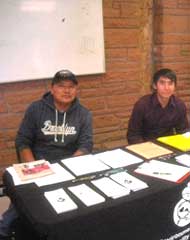 Charles T. James
NNEPA Fort Defiance, AZ / Air Quality Control
I have worked with many interns during my time at college. So far I have been to two different institutions and been to two different internships. I think it is great to experience time, ideas, and explorations together. It is even better after working hours. One of the greatest things I have ever done with fellow interns was climb a 14,000 ft. mountain or surf the Great Sand Dunes in Colorado. Working with a mentor is also something great because they can show easier ways of confronting problems or looking at a situation in a different light. Being around other minds was insightful too. To collaborate with some info with the other interns was interesting because we are all from different backgrounds. I was cool to get some of their ideas, especially deciding which image to use on my pamphlet assignment. When we traveled to different sites, we got to know one another. Everyone has special goals in life. I can’t wait to see what life brings next.
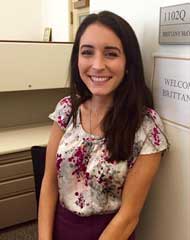 Brittany McConville
U.S. EPA Headquarters Indoor Environments Division (POLICY)
This summer, I had the privilege of working as a ITEP Intern at the U.S. Environmental Protection Agency in the Indoor Environments Division in Washington, DC. The public health topic I worked on this summer was with Tribal communities and their indoor air quality issues including radon, mold, pests, dust, wood burning stoves, and carbon monoxide. These present several problems in adults and children including asthma, lung cancer, and even death amongst others. The approach that the EPA took with me this summer was to participate in many indoor air quality groups’ conference calls and helping where I can, while also working on several tribal success stories to document on the EPA website. This is a way for other Tribes to see the incredible IAQ programs around the nation while highlighting different government grants and resources they can pull to complete their own programs. My main finding is that there are many avenues to leverage resources but there isn’t a good way to disseminate this information. I was also able to participate in the Northwest Tribal Asthma Project Team and helped edit and create documents for their efforts. I contributed in an intern panel to inform the Office of Air and Radiation on Tribal consultation and environmental justice issues. Finally, I attended the Region 6/7 Tribal Stakeholder’s Meeting in Wyandotte, Oklahoma and learned about various indoor air quality topics, success stories, and ways to leverage funds. This conference also included a full day of indoor air quality training that was presented by NAU ITEP. In conclusion, our nation is in need of driven public health professionals who are passionate about eradicating indoor air quality issues in Tribal nations.
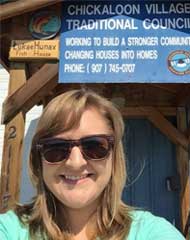 Jessie Mroz
Chickaloon Village Traditional Council (CVTC)
I am a graduate student at the Indiana University School of Public and Environmental Affairs studying Environmental Science and Public Affairs. I worked with the Chickaloon Village Traditional Council (CVTC) in Sutton, Alaska and developed an Indoor Air Quality program for the CVTC Environmental Stewardship Department. I drafted a Resolution on Indoor Air Quality signaling Council support of future IAQ projects and grant applications. This passed unanimously by Council, along with a comprehensive Green Cleaning Policy for all CVTC buildings, limiting the use of toxic cleaning products and standardizing the cleaning process for healthy indoor air. I created a Mold Policy for residents of Tribal housing, which provides new tenants with extensive information on mold health hazards, prevention, and remediation. Two ordinances I drafted on Speed Limits in Tribal Housing and No Idle Zones for all CVTC campuses are going through internal revision and approval process, but were positively received by the Chickaloon Council. I supported future IAQ research by gathering IAQ baseline data from CVTC buildings and Tribal and community homes. I also created informational flyers and brochures on IAQ hazards to distribute to Tribal members and the greater community. I couldn’t have imagined a better internship than I had at Chickaloon this summer. My supervisors were supportive, which enabled me to get a lot of good work done and learn directly from some really amazing people. My projects were well-planned and robust, giving me a professional development opportunity as well. This has been such a great experience that it has inspired me to pursue a future career advocating for Tribal environmental programs.
 Janessa Roy
During my internship with the National Nuclear Security Administration in Washington, D.C. I was assigned with the Office of Leadership and Career Management. My supervisor gave me two main projects. One was to go through a data set of all the courses that Supervisors in the organization took and total the hours of supervisory training for each. This information was emailed to the supervisors. The second project was to go through the Federal Employee Viewpoint Survey results to come up with recommended courses that would bring up the positive rates in the survey. Overall, I was a wonderful time in Washington, D.C. and spent many hours visiting the museums and memorials.
 Trey Saddler
EPA R9 Office of Air, San Francisco, CA
I am a recent graduate of Salish Kootenai College and an enrolled member of the Chippewa Cree tribe of Montana and I spent this summer working with EPA Region 9 Office of Air. The purpose of my internship was to help establish a Region 9 Tribal Indoor Air Quality and Health Network. This network would be designed to facilitate the sharing of resources, information, and to help foster working relationships between tribes, governmental agencies and nonprofit organizations to improve indoor air quality on reservations within the region. I spent time researching current work being done, contacting potential partners, and developing the framework for this network. In the future, I hope to attend graduate school for environmental toxicology and work with tribes to improve their overall environmental health.
 Nicolette Slagle
Honor the Earth
The ITEP internship allowed me the opportunity to achieve several long-term goals. Through this program, I was able to work with Honor the Earth and become engaged in a number of land-rights issues facing Tribes. This experience has taught me a lot about how environmental regulations are failing Tribes and the jurisdictional rights some Tribes are starting to claim. Part of my internship included working with the White Earth Tribal Department of Natural Resources on their Treatment as a state paperwork. I have also worked with their pesticide officer to determine sampling sites to install groundwater monitoring wells. Since Honor the Earth is a national organization, I have been able to learn about several other national campaigns, such as the Intertribal Utilities Council and other renewable energy projects. I also got to help with several community-based projects, including a lacrosse camp and various community meetings. The ITEP program was an amazing opportunity, and I would recommend it to other students interested in Tribal issues.
 Maria Thompson
Keweenaw Bay Indian Community
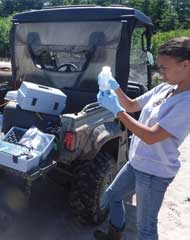
My internship was through the Keweenaw Bay Indian Community Natural Resources Department in L’Anse Michigan. The tribe is located next to Lake Superior and therefore unsurprisingly many of their efforts revolve around cleaning and maintaining the lake and its surrounding environment. Throughout the course of the internship I was exposed to new technologies and an alternative way of doing things.
During the internship my primary responsibility was to establish the community’s energy baseline so that they would be able to assess their energy efficiency efforts and set goals for the future. However, I was also able to assist with water sampling, fish surveying, and wildlife management projects. Overall the internship broadened my knowledge in a multitude of fields relative to environmental management, and has positively influenced my future career goals.
 Jacklyn Velasquez
Big Pine Paiute Tribe of the Owens Valley- Environmental Department
After completing my first year in law school I decided to get some environmental experience in an area that wasn’t a law office. Though a little unconventional, I wanted to see how ‘real life’ application of environmental law is applied on the Tribal level as compared to the theory I learned from class. What I found was an experience that helped me learn and grow tremendously in a different way than the classroom offered. Learning in an office full of professionals like the ones here in Big Pine is a drastically different experience than learning in a classroom. Here, the passion for environmental protection is high and the workload is also. Things you learned in theory you get to see in actual practice. That’s my favorite part, getting to apply what I’ve learned. It makes all those early morning and often riveting lectures feel so much more valuable. I didn’t bring my Code of Federal Regulations book but I wish I had! Now that I’ve learned material in these two different ways I feel more prepared and more excited than ever to get back to work on my legal education.
To any student interested, I absolutely recommend working with this group of professionals, especially if you’re looking for Tribal experience. The history of Owens Valley Paiute is so rich that it would intrigue any person to pursue learning and advocating for environmental justice. Interning with the Big Pine Paiute Tribe is really an amazing experience.
 Christopher B. Yazzie
Central Arizona Project
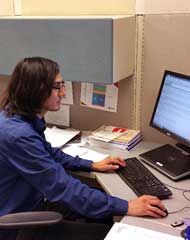
I worked at Central Arizona Project on an assignment that created profiles of Arizona Indian tribes that obtain water from the Colorado River. I utilized data from Central Arizona Project and the Bureau of Reclamation to create historical water delivery and usage reports. The project I participated in will aid Central Arizona Project in stakeholder relation, specifically Arizona Indian tribes.
The internship provided me with the experience of working in an office with water resource professionals. I also learned about the issues Arizona Indian tribe face with utilizing water obtained from water right settlements. Overall, working at Central Arizona Project allowed me to expand my working experience as an Environmental Engineer and learned how my career goals can be used to contribute to Indian tribal water resource management.
 Krystle Chapman
Navajo Nation EPA Air Quality Control Program
Fort Defiance, AZ
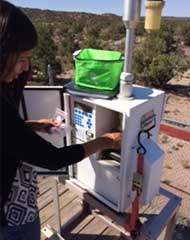
I enjoyed working with the Navajo Nation EPA Air Quality Control Program. I learned so much during this internship. I learned about air monitoring and the different pollutants that the Navajo Nation is monitoring. I learned about particulate matter and their different sizes. I was given background information on how long the program has been around and the services that they provided. Throughout this internship, I was able to see that I became more confident in my work. This was such a great opportunity. I loved working at this internship and am looking forward to applying what I have learned here to school. I am really thankful for my mentor. She was an amazing teacher who gave me so much experience with things that I have never attempted before. I know that the things I have done here are what I am considering doing as a long term career goal.
 Sunshine Claymore
Nez Perce Tribe ERWM Air Quality Program
Lapwai, ID
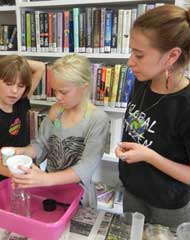
I graduated with a Bachelor’s in Environmental Science from Sitting Bull College located on the Standing Rock Reservation in North and South Dakota. Through the internship at the Nez Perce Tribe Environmental Restoration and Waste Management Program (ERWM) department I was able to apply the knowledge learned from my secondary science education courses to specialize in outreach and teach about various aspects and impacts we interact with as we breathe. I had ample opportunities to create air quality presentations and hands-on outreach activities to share with the local youth and adults. I was able to learn more about the tribal burn permit program and how they determine whether the air quality is adequate or if there needed to be a public release.
Some of the main objectives of this internship were to develop and present air quality presentations to the various summer schools, camps, Boys and Girls Club, and at least three local libraries. As for adult outreach this was focused on setting up display boards about air quality, burn permits, and personal/environmental health while participating in community events. As supplemental objectives I attended three tribal/ environmental education symposiums. This internship was a great opportunity to strengthen environmental awareness while developing human relations skills.
 Justin Harter
Gila River Indian Community Department of Environmental Quality
Sacaton, AZ
I am a graduate of Business Administration at Haskell Indian Nations University in Lawrence, KS. I interned at Gila River Indian Community (GRIC) Department of Environmental Quality (DEQ) Air Quality Program in Arizona. During my internship I learned about the operations of one of the most comprehensive air quality regulatory and monitoring agencies in Indian country. I (1) coordinated and assisted in implementing the US EPA School Flag Program within the community, (2) developed presentations and outreach materials for adults and youth, (3) assisted in compliance inspections of point source emissions facilities, (4) assisted in the sampling and collection of ambient air quality data, (5) performed QA/QC technologies; such as, audits and calibration of O3 analyzers and PM10 monitors, (6) and studied environmental policies and issues relating to Indian country and the consequences of climate change in specific tribal communities. While I was interning, I was able to take part in two modules within the Tribal Environmental Management and Planning online course through ITEP at Northern Arizona University.
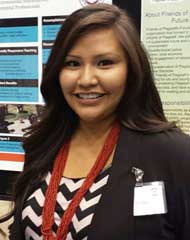 Tyesha Ignacio
UCS EPA Region 9 Air Permits Office
San Francisco, CA
This internship experience has been very enlightening and was largely made by the staff who has been very open to answering any questions, involving me in activities, and have always been willing to share their experience and opinions. Although, my internship was with the Tribal Air Permitting office in the Region 9 of the EPA; I have been able to be involved with the Environmental Justice, Tribal Programs, and Civil Rights, GIS coordination, Superfund Offices, and Navajo Nation also and expand my overall knowledge of the USEPA. Prior to this internship I can say that I knew little to nothing about how the EPA worked, air permitting, or even much about the Navajo Nation EPA. All of my projects and interactions involved a tribal element, which I believe made all the difference. In addition, because a majority of my projects circulated the Navajo Nation I believe that gave my work an extra layer because the community was not something separate from me. I was fortunate enough to be able to attend the Summer Regional Tribal Operations Committee meeting, in which tribal officials to meet and discuss environmental issues unique to their tribes’ and how they plan to address them with the help of EPA.
I learned so much from my time at EPA. It was a really an all-encompassing internship experience. The projects I worked on pushed my critical thinking skills and helped me further develop my writing skills. I also became more aware of environmental issues on a national, state, and tribal level. I believe this internship helped me develop my professional and educational skills by allowing me to work in a professional office and defiantly influenced my future career and educational goals.
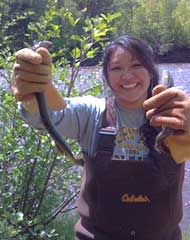 Darienne Nez
Great Lakes Indian Fish and Wildlife Commission
Odanah, WI
As an intern at the Great Lakes Fish and Wildlife Commission (GLIFWC) my main project was to ensure Chairwoman Karen Diver was up-to-date and prepared to fulfill her duty as a member of President Obama’s State, Local, and Tribal Leaders Task Force on Climate Change on Preparedness and Resiliency. My supervisor and I worked to ensure that the recommendations received by several different Native American tribes were adequately represented in each subgroup as well as formatted and edited in a presentable and professional manor. The four different subgroups I was able to work on included Natural Resources & Agriculture, Built Systems, Disasters Recovery & Resilience, and Communities: Human Health & Development. Working with the Task Force Team has challenged me professionally in every aspect. I was responsible for intense reading, writing, and researching on various issues of climate change, solutions, environmental programs, and tribal law and politics.
I was also fortunate enough to work with the GLIFWC Lake Superior Fisheries Department and Public Information Office. The fisheries department allowed me to gain field work experience, where I was able to collect and learn about several different types of fish in the Great Lakes as well as the techniques for collecting data and fish.
All my projects and activities heightened my awareness of the rising issues of climate change. I was able to gain skills in and out of a professional setting and have been challenged to do amazing things for all Native American Tribes in my future career.
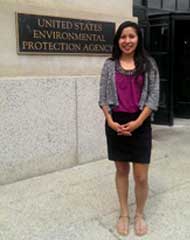 Amber Reano
US EPA Office of Air and Radiation, Office of Atmospheric Programs, Clean Air Markets
Washington, DC
Ya’at’teeh! Hello, my name is Amber Reano and I was an intern at the USEPA Clean Air Markets Division in Washington, DC. I am originally from Santo Domingo Pueblo, New Mexico and I am a rising junior at Brown University in Providence, Rhode Island. I heard about the internship through a faculty member at Brown University and she encouraged me to apply because I am a public health major interested in environmental health. I was selected for the ITEP internship and took advantage of the opportunity to head to DC because I knew I would gain important experience working with the USEPA; which I did.
I worked specifically with the CASTNET monitoring program and their affiliates to develop essential communication and accessibility of data for tribal environmental communities. I took on four main projects which included generating web content for the tribes to view tribal monitoring sites and its data/information (will be published on the CASTNET website upon completion of my internship), attending majority of CASTNET-related/tribal-related meeting while at EPA headquarters, developing a poster for the National Ambient Air Monitoring Conference in August, and writing an article for the Climate Change Division of the EPA.
The opportunity to intern at EPA headquarters was unequivocally one of the best experiences I could have hoped for. This internship gave me the confidence, communication skills, first-hand knowledge, and much more to continue my academic and professional journey in the future. I want to thank my supervisor and mentor for all of their advice and mentorship over these last two months. I also would like to thank all my family, school, and the individuals at ITEP and EPA who made my internship possible. Ahe’hee!
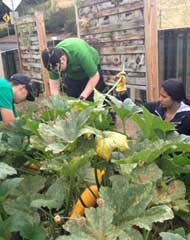 Natalia Shaw
Santa Ynez Band of Chumash Indians Environmental Office
Santa Ynez, CA
I was initially looking to expand my knowledge and gain experience in an environmental related field, but I never imagined that it would happen in such a short time while working for the Santa Ynez Band of Chumash Indians Environmental Office. I participated in a wide range of projects and activities, from writing up important documents for grants to sampling water in the local creek to going along on a home assessment to search for energy efficiency issues and possible indoor air quality problems. Through every project I was able to learn something new and gain that experience that I had been seeking. My work also taught me how to teach others and how to implement all that I have learned, and that is a very important aspect in all areas of life. I have had the opportunity to share my knowledge with tribal members and youth through several outreach opportunities and have been able to see, first-hand, the benefits of education on environmental issues.
My internship has helped me develop vital skills that I will be able to use in all aspects of my life, especially in school and any future career I may obtain in the field of environmental science. Every project provided a new learning opportunity and a challenge that led the way for new skill development. I have gained an understanding of environmental issues, especially concerning indoor air quality, which I would not have obtained if it were not for my internship. This ITEP internship provided me the chance to be in a new environment, one in which I have been able to thrive and grow professionally. No classroom setting could replace the experience I have had working for the Santa Ynez Band of Chumash Indians and all of the knowledge I have been able to obtain.
 Tara Weston
Inter-Tribal Council of Michigan Environmental Services Division
Sault Ste Marie, MI
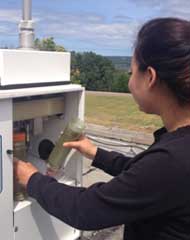
Working with the Inter-Tribal Council of Michigan in Sault Sainte Marie, MI was a great opportunity to gain experience with air quality. I had a variety of assignments working with ambient and indoor air quality with three Michigan tribes. Conducting emissions inventories was a large part of my summer. This information would provide guidance when implementing new regulations regarding air quality. The inventories helped to sharpen my research skills while working in the office and my communication skills when visiting facilities in the field. I also gained experience working with Partisol-Plus Model 2025 Sequential Air Sampler monitors and a Model 703E photometric ozone calibrator. Changing and picking up filters, assisting in audits, and replacing drying chambers were some of the tasks I had at the monitoring site. Experience working with ambient air monitors will be valuable when I enter this field after I graduate. The inspections we conducted on a visit to Mount Pleasant gave me experience with indoor air quality. Assessing the moisture issues in tribal buildings and informing the staff of these problems gave me practice with this process and I was able to convey my professional opinion on how to mitigate their air quality issues.
This internship allowed me to put my classroom knowledge into real world use. I also got to experience what it would be like to work with tribes to improve their environmental quality. The skills I have gained this summer will help to develop my resume and gives me a competitive edge after I graduate. What I ultimately took away from this internship was that I would love to work for an agency like the Inter-Tribal Council of Michigan, but with assignments with more fieldwork opportunities.
 LeManley Gishie
Central Arizona Project
Phoenix, AZ
My internship was a success. Interning in the Environmental Department at the Central Arizona Project (CAP) opened my eyes to the issues we are currently facing, and also the issues we will be facing. With the shortage of water, there is a crisis on the rise. Beginning to understand these issues has helped me to prepare and study for purpose. The environmental issues will not go away, so there needs to be a solution. Working at the CAP showed me that the resources are actually real, and unless you are up to date on environmental issues, the general public will not even know about issues until they are being fined, similar to what is happening in Los Angeles, CA. My experience has taught me to be resourceful and every little bit to help the environment helps.
Learning how the tribal laws interact with the outside companies has helped me to know tribes still have some work to do in order to properly regulate activities within the reservations; to protect not only earth but also the health and safety of the public. Helping the CAP to understand the local tribal regulations has helped the tribes. It helped to improve the relationship between tribes and the CAP. So, when the tribes improve their environmental regulations, the CAP will be ready to work with them. My time spent here will serve as a basis to build upon to help both the company and the tribes.
I would advise all future interns to apply to intern at the CAP, it’s a great company and you will learn so much more than about water. I am grateful for the opportunity I had as an intern at the CAP!