

 Sophie Burgess
Big Pine Paiute Tribe of Owens
Big Pine, CA
After completing a major in Environmental Design, I found that I was still looking for ways to peruse additional interests that I had in college that fell outside of my major. During my senior year, I took an environmental justice class and became very passionate about the subject. However, I never got to explore this interest as much as I would have liked to. When I heard about the ITEP position at the Big Pine Paiute Tribe of Owens Valley, I was excited to combine my passions of environmental justice, community outreach, and research work. The past eight weeks that I have spent in this position have been incredibly informative, unique, and have made for an unforgettable experience. During my time here I have had the chance to monitor and collect weather and particulate matter data for the Big Pine Air Quality Program, in addition to working with the youth of Big Pine. I was able to create and lead several informative air quality activities with the Big Pine Education Center and the Owens Valley Indian Water Commission Environmental Youth Camp. I have also had the opportunity to explore various projects and research that the surrounding community is working on, and have been able to see the direct effects that climate change is having on this area. Overall, this experience has taught me the power and resiliency of small communities and their battle with multifaceted, climate change related issues. I have learned so much during my time here and am so grateful for the opportunity to work alongside such dedicated and inspirational professionals. Additionally, I couldn’t have been in a more stunning location- nestled between the Eastern Sierra and the White Mountains, the Big Pine area has limitless access to any outdoor recreation you could wish for. I hope to be back in this insanely beautiful area soon! I would highly recommend this opportunity to anyone considering it, and am excited and passionate about incorporating this type of work into my future career.
 Darcy Emm
EPA Region 9
San Francisco, CA
For this ITEP Internship through EPA Region 9, I was placed in the air permitting office. My summer projects included air modeling of minor sources under the Air Permitting Program on Tribal Lands and the Identification of Possible Minor Sources of Air Pollution on Tribal Lands. This internship with the EPA offered a professional environment that I previously had no experience with. It was very cool to share my culture, experience and knowledge of native people with them on a professional basis. The people at the EPA routinely worked with tribes but this was usually just over the phone or email correspondence. I believe that having a native intern benefitted them as well because they were able to ask questions and see how native people think and interact with other nonnative people.
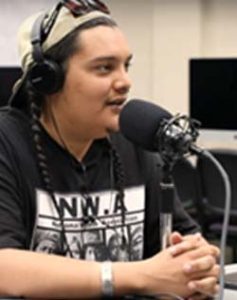 Nataani Hanley-Moraga
Navajo Nation EPA
Fort Defiance, AZ
During this past summer I had the opportunity to work for my tribe under the Navajo Nation EPA Air Quality Control Program (AQCP). I was brought on to assist in their Open Burn project, which was to assist in making a video to disperse amongst chapter and be used during their presentations to the community. I was also in charge of assisting with their day-to-day responsibilities and see how their program functioned.
This internship has provided opportunities, experiences, and knowledge that can not be attained within a classroom. It gives you a first-hand look into a tribe and its members of the community. You can get an idea of their way of life, their issues, and see their land. Through working for the AQCP, I saw places of my reservation I have never been to. For my project I was taken to Canyon de Chelly and hiked down to see ruins left by our ancestors, Navajo monument, and Spider Rock.
Throughout my internship coworkers gave me insightful knowledge of the community, language, and history. All the while still teaching me about what their responsibilities are. Things like monitoring air quality, indoor and outdoor. I also got an inside look of a gas compressing station and getting a run-down of its history. These are things that you wouldn’t be able to learn through lectures or videos. You also get the opportunity to form connections with people or important resources that could assist you as you continue your way through school.
By the end of my internship I had learned more than I originally thought I would. I also saw a whole lot more than I thought I would too. I value my time on the reservation and working with one of the best tribal air quality programs. They have given me an experience that I won’t forget and knowledge that I can use as I continue to pursue my degree and career. I highly recommend an internship with ITEP, as it can take you places you have never been. As well as give you an inside look at your tribe’s issues or other tribes issues that interest you. You will leave more knowledgeable, prepared about your field of interest, and connections that will last and assist you in your education and career.
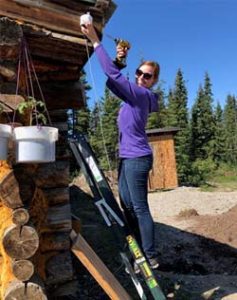 Julia Hnilicka
University of Alaska Fairbanks
Fairbanks, AK
Summer of 2019 will go down in Alaskan history books as one of the hottest (so far) and smokiest summers on record. With my ITEP internship I got to be part of that history! As a lifelong Alaskan resident I was proud to work with ITEP and the University of Alaska Fairbanks to place air quality monitors in rural parts of the state. I was able to fly to and drive around some of the most beautiful parts of my home that would have been cost prohibitive on a student budget. I was also on a mission to bring access to information and data to rural residents that they haven’t had before.
Air quality is an important part of healthy lives and although Alaska is pretty free of human made air pollution, wildfire smoke can have huge health impacts. Our elders in Alaska are particularly susceptible to health impacts when it comes to smoke or dust inhalation. Our wildfire seasons can be long and intense, the more data we can compile and use for the future, the bigger positive health benefit we can create.
Often times urban centers are monitored for air quality, but my project focused on rural Alaska which means that I got to see some very remote communities in breathtaking locations. I am so glad that ITEP partnered with UAF on a pilot project and I got to be the exploratory agent. The flexibility and trust that both entities afforded me was exciting and helped me grow as not only a researcher but also as a communicator and traveler.
I would strongly encourage other students to apply and work with ITEP, not only are they focused on exciting projects, but they also take special care and consideration with their interns. I will look back on the Summer of 2019 as not only hot and smoky, but also incredibly impactful on my education and future.
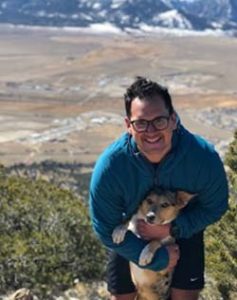 Alex Hufft
US HUD Northern Plains Office
Denver. CO
My ITEP internship with the U.S. Department of Housing and Urban Development (HUD) is one that has most definitely shaped me and my ambitions for future career opportunities. What was so great about ITEP and their staff is their investment in not only their program, but also in the interns who are participating. There was never a time where I was left wondering with a question or concern. Any time I emailed the staff, they were quick to respond and almost always had the answer, and if they didn’t they were figuring it out alongside you. I think another great thing about my ITEP experience is in regards to the internships/host sites they choose. When reading the descriptions of each host site you realize that they are not just going to be a job you go through the motions at every single day, but they are roles that foster independent thinking, research and continual learning. I believe anytime you are put into a position like that you’re going to enjoy your time a little more and come out feeling more positive about it all.
My time spent with HUD’s Office of Native American Programs in Denver, CO was a great exposure to the civil service roles that a federal entity possesses. And I am not sure I’d ever get that exposure if it wasn’t for the opportunity the ITEP has created for me and all the other individuals who have gone through this program. I also think this program allows you to see opportunities that are out in the world that you may have never known existed. Whether that be a specific role within a company or even that a company or organization exists to do a very specific thing, especially in regards to Native American communities. I think at the end of the day that is what is so great about ITEP. That there are these tribal initiatives and jobs out there to better serve indigenous communities and ITEP is trying to help establish awareness by providing opportunities within those initiatives and jobs for graduate and college aged individuals.
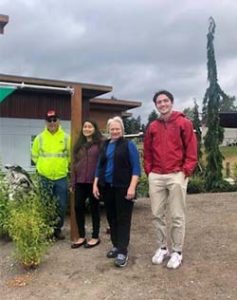 Winslow Lewis
Tribal Healthy Homes Network
Tulalip, WA
My name is Winslow Lewis and I recently finished my 2019 Institute for Environmental Professionals Internship (ITEP) with Tribal Healthy Homes Network in Tulalip, WA. Tribal Healthy Homes Network is a nonprofit organization that that brings together tribal environmental, public health, and housing practitioners to identify and employ effective methods for reducing indoor air contaminants in tribal homes. During this internship, I was asked to contribute to the renewal of the organizations Tribal Indoor Air Funding Directory, a guide that compiles resources that can be used by tribes or tribal members to address indoor air issues nationwide. This was designed to alleviate the indoor air quality issues faced by many indigenous communities through connecting tribes with the grants and loans best suited for the project they’d like to pursue. The majority of my work involved compiling the content of this website, communicating with grantors to ensure the accuracy of the information we’ve compiled, and contributing to the design and functionality of the database we’ve built.
For me, my ITEP internship offered a unique experience to work for an organization that make the most out of the limited resources we had available. The people at my host organization essentially offered me a masterclass in community organizing, community-based research, and project management. I was able to absorb this information and grow within my position because I approached this project with the clear goal of taking on responsibilities and learning from the approach of my host organization. While the majority of internships can revolve around clerical work and limited responsibility, it is my feeling that ITEP internships prepared me to lead within this field, by giving me a taste of what effective, community-oriented work should look like. I am incredibly grateful to have had this experience and am looking forward to continuing to develop as a tribal environmental leader moving forward.
 Aracely Navarro
Alaska Community Action on Toxics
Anchorage, AK
The summer of 2019 I interned with an organization named the Alaska Community Action on Toxics. This non-profit organization focuses on issues of environmental health and environmental justice. Their work is diverse and they collaborate with a lot of local stakeholders around Alaska regarding issues of water quality, air quality, soil quality, voter rights, and advocate for policy change. In addition, they run their own organic gardening program where they pair people with land and people without to create local organic gardens. The staff of ACAT are all lovely people and I really enjoyed my time working with them. They were beyond generous, loving, helpful, driven and very passionate about the work that they are doing. I learned so much this summer about Alaska and the issues that the local people are facing in terms of climate change and contamination around the state. But, I also learned about the multiple ways that the community can come together and organize for a safer and cleaner world. This was an amazing experience and I wish I could have been with ACAT longer!
 Caressa Nguyen
Tribal Healthy Homes Network
Tulalip, WA
My ITEP Internship was with the Tribal Healthy Homes Network and the Tulalip Tribes on the Tulalip reservation, located approximately 40 minutes north of Seattle. In 2017, Tribal Healthy Homes Network developed a Tribal Guide to Indoor Air Quality (IAQ) Funding that had not been updated since. This summer 2019 was spent developing a searchable directory for finding IAQ funding to be used by Native Alaskan tribes and tribes nationally. My role in developing this new, searchable guide was conducting qualitative research by creating a survey that was sent to tribes and organizations. The feedback we received through the survey results were utilized to design a user-friendly resource guide incorporating features and search methods most useful for tribes. This information was used in designing the online funding directory, which our team developed mock-ups that I presented to the Environmental Protection Agency for feedback. To ensure that this guide is as user-friendly as possible for tribes, I was tasked with creating a Tribal Review Panel that gave me the opportunity to work directly with tribes across the nation and Alaska Native villages in the development of this resource, and learn about the issues they face with housing and indoor air quality.
My ITEP internship has been spent doing meaningful work that can be beneficial for all of Indian Country and Native Alaskans. Working closely with my host site mentor and fellow ITEP intern has enabled me to grow as a professional and in my role on a team. Prior to this internship, I had minimal knowledge in Indoor Air Quality, but held a deep desire to expand my knowledge of Indigenous environmental issues. With a background in natural resource management, agroecology, and water policy, I feel that I can approach issues with a more well-rounded and holistic understanding with my newly acquired knowledge in air quality. I would highly recommend an ITEP internship, for those seeking to do meaningful work.
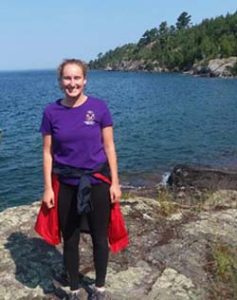 Kaila Stein
Keweenaw Bay Indian Community
Keweenaw Bay Indian Community
My experience with ITEP was very different than a typical internship. Not only did I have the opportunity to work in an office setting, I also had the chance to do a variety of work in the field, get to know the local area, and learn about Ojibwa culture by attending many cultural events throughout my summer. This was a rich, varied experience where I was able to get a taste for many different types of environmental work. I had the opportunity to work on a variety of different topics including air quality, water quality, wildlife, community outreach, ecology, and more.
This summer, I did a lot of field work. Since the Upper Peninsula of Michigan is situated on Lake Superior, a lot of this field work had to do with the lake. I went out on the lake to do water sampling, went to the Huron Islands to inspect the state of the national wildlife refuge on the island, and went to do wild rice sampling, among many other experiences. I also learned about the local culture of the Ojibwa people who are native to the area. Some of my coworkers were native and were very kind to teach me about their history and traditions. I also attended the tribe’s Pow Wow in July where I was able to see the traditional dances of the tribe as well as beautiful regalia that the tribal members wore.
In addition, while I was in this part of the U.S. that I had never been to before, I was able to experience a different way of life than what I was used to. For example, before this summer, I had never seriously considered foraging. However, I learned about the abundance of wild food that grows freely and how to collect it. I went to pick blueberries, thimbleberries, and raspberries. These berries grew so rampantly in the area that while I was out in the field working on projects, I could pick a few berries as I walked for a quick snack. In addition, since I lived right on Lake Superior, I had many adventures this summer out on the lake and in the mountains around it. This internship was a great experience, I got to see a beautiful part of the United States that I previously did not know about while also working to protect the natural beauty of Lake Superior.
 Xaviera Stevens
Southwest Environmental Health Sciences Center at The University of Arizona
Tucson, AZ
I worked in the Southwest Environmental Health Sciences Center at the University of Arizona. The focus of my internship was education outreach and environmental summer camps. I was able to help create the curriculum and schedule for one of the programs and help to teach some of the activities for some of the other summer camps. I worked in and out of an office and I was able to work pretty closely with some of the students. Most of the summer camp programs involved teaching students about environmental health, introducing them to campus departments as well as resources, and bringing in guest speakers. I spent two months learning about environmental health and ways of teaching the information I was learning to several different age groups. I was able to observe and learn some tools for helping a group of students to connect and learn better. I was also able to get to know my co-workers, build relationships with them, and explore some of the beauty that Tucson has to offer. I learned a lot more about the tribes in the surrounding area and how the University of Arizona interacts with them. Through the process of interacting with Native Americans in the southwest, I also learned more about their cultures and specific environmental health issues that they deal with. Getting this internship through ITEP allowed me to apply to several different places at once and gave me a lot of practice with interviews. Going through ITEP also allowed me to focus more on my work and experience in Tucson because I did not have to worry about making sure I could pay for rent and the flights to and from Tucson. At the end of the two months, Tucson has grown on me and I feel more confident that no matter where I go to start my career I will be able to land on my feet and find people to learn from and connect to.
 Noah Williams
North Central Climate Adaptation Center
Boulder, CO
Hello, my name is Noah Williams, I am Paiute from Bishop, CA. I recently completed my undergraduate studies receiving my B.A. in Communication at California State University Channel Islands in May 2019. This Summer I had the privilege of being selected as an ITEP summer intern at the North Central Climate Adaptation Science Center (NC CASC) at CU Boulder. NC CASC is one of eight regional climate centers under the Department of Interior that specialize in climate adaptation planning by fostering new and innovated science directed towards Air, Land and Water. I worked directly with NC CASC’s Tribal Resilience Liaison; I was tasked with supporting ongoing tribal climate adaptation projects, produce website articles and compose/design the first-ever tribal climate newsletter released by NC CASC. I also had the opportunity to participate in consortium partner meeting, tribal climate workshops, joint-stakeholder committee meeting and site visits to reservations within the North Central region. These opportunities allowed me to network with tribal professionals and learn firsthand from natural resource managers who are on the frontlines of combating climate change on tribal communities.
The ITEP internship was an opportunity for me to connect with tribal leaders, learn about on-going climate issues of 31 federally recognized tribes in the North Central region while learning how to conduct myself in a professional setting. I have learned much in the 8 weeks working with NC CASC and developed skills that are fundamental to my future academic and career goals. The transition from student to a young professional began with the ITEP internship, I highly recommend any upcoming graduate seeking a professional experience in environmental science to apply and pursue this great opportunity.
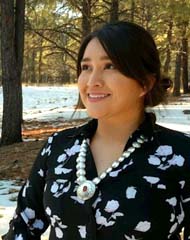 Darrien Nikkole Benally
Tulalip Tribes and Tribal Healthy Homes Network
Tulalip, WA
This summer I worked with the Tulalip Tribes and the Tribal Healthy Homes network in Tulalip, WA. The Tulalip tribes are located along the Puget Sound region. During the summer of 2017, there were severe wildfire episodes all along the west coast. The wildfire smoke created hazardous conditions at Tulalip because the smoke from the fires was centralized over the Tulalip bay. This internship was focused on creating a response network in the event that wildfires will likely occur again and the resulting wood smoke could impact the region again.
My role as a student intern was to create qualitative surveys to interview various program managers at Tulalip administration. These surveys asked about air quality index familiarity and health impacts related to poor air quality and wood smoke. There were two more surveys created which had similar questions, but were used for different tribal nations and Tulalip community members. These surveys will be used to create this response network for Tulalip in the event of another severe wildfire season.
I enjoyed working with the Tulalip Tribes and the Tribal Healthy Homes network because there was a lot of support from my host site mentor. I feel this experience has helped me grow academically and professionally. I learned a lot about Indigenous environmental issues and how to create a solution to these issues using a tribally competent framework. I enjoyed working with the members of the Tulalip community because they were willing to help in anyway they could and were interested in air quality topics. This experience helped me take my classroom learning out in to the field and gave me a great foundation to build my professional career on. I would encourage anyone to apply to this program. Without this program, I would have not been able to work outside of state and build my professional skill set.
 Megan Kerstein
Nez Perce Tribe
Lapwai, ID
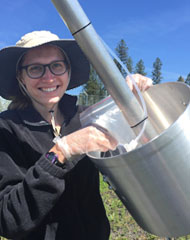
My name is Megan Kerstein, and I am from Chicago, IL. I am currently a master’s student studying biomedical sciences at Boston University. As the Nez Perce Tribe Air Quality Office Education and Outreach Intern, I had a fantastic summer experience! I spent a large portion of the summer presenting to children at area libraries, summer schools, and the Lapwai Boys and Girls Club. I often discussed the intersection of health and the environment with an emphasis on the respiratory system and how air quality impacts respiratory health. I came up with engaging activities for the children, including making a mini lung model and making rockets that we then had the opportunity to test fly. It was really thrilling to see how passionate the children were about science! I also worked various outreach events in the community, manning the air quality booth and answering questions from community members. I also assisted with the EPA CASTNET air quality monitoring network site in Kamiah, ID, where I helped change out air filters on the equipment. I had other amazing opportunities during my time as an ITEP intern, including touring the Dworshak National Fish Hatchery, assisting with a forestry camp for local 6th graders, handling Pacific lampreys as part of a tribal conservation project, and shadowing a physician at the Nez Perce health clinic, Nimiipuu Health. Every day during my internship I learned something new, ranging from learning more about the Nez Perce culture and language to learning how to effectively convey health information during my presentations with children. I am very grateful to ITEP and the Nez Perce Tribe for my summer experience, and I will use all the skills I learned as I go forward in my career in health and medicine.
 Michelle Pawlow
Northern Cheyenne Tribe
Lame Deer, MT
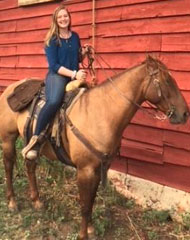
I am so grateful to have had the opportunity to be an ITEP intern for the Northern Cheyenne Tribe in Lame Deer, Montana for the summer of 2018. As an environmental engineering student at the University of Michigan, this experience has been especially beneficial to my growth as student and working professional within the field of air quality and environmental policy. As an intern, I had the opportunity to work with staff at the air monitoring sites, testing for the concentration of common air pollutants output by the nearby power plant. I also was able to complete HAZWOPER training, create educational indoor air quality materials for community members, and even help care for the local prairie dog population. I was really fortunate to have had a variety of different tasks each day, and I loved having the opportunity to leave the office setting and do work in the field.
I had no idea what to expect when I began working in Montana, and certainly was not aware of how much this experience would impact my future decisions. In just eight weeks I have made lasting friendships and taken weekend trips that I will remember for the rest of my life. I never expected this internship experience to provide so much more for me than just a job opportunity. While I learned so much about air quality and tribal health, I also was able to travel to so many historic sites and parks with new friends, including hiking in Yellowstone, attending a wedding in Bozeman, horseback riding in Busby, and even taking a road trip to Mt. Rushmore. Each week of work provided valuable learning experiences, and each weekend a new adventure.
I highly recommend anyone interested to apply for the ITEP internship. It is an amazing opportunity that allows you to learn not just about your work program, but also about yourself. As I continue to complete my education and move forward towards a career, I now will seek out job opportunities that allow me to spend time outdoors conducting field research or doing consulting work. I know I will continue to reflect on my experiences from this summer for the rest of my life, and couldn’t be more grateful to have been able to work as an ITEP intern for the Northern Cheyenne.
 Sanober Mirza
Gila River Indian Community
Chandler, AZ
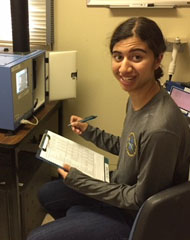
For my ITEP internship, I worked with the Gila River Indian Community’s Air Quality Program, where I helped with outreach about the threats from extreme dust events. I was responsible for writing a mitigation plan for extreme dust events to be submitted to the Environmental Protection Agency. This mitigation plan focused heavily on public notification and outreach. I also helped Air Quality employees with ambient air quality monitoring through site checks as well as compliance and enforcement through source inspections. I helped Department of Environmental Quality employees with outreach events, while learning more about the Community and its relation to the natural landscape.
Overall, I gained many different skills from this internship experience. I learned technical skills related to air quality monitoring and saw firsthand how meeting policy requirements are carried out on the ground. I also got professional experience working with DEQ employees, Community members, stakeholders in agricultural and industry, Arizona Department of Environmental Quality, and the EPA. Doing outreach in a Tribal community taught me about communicating issues related to the natural environment and I learned so much about the history and traditional culture of the Akimel O’otham and Pee Posh people. I am very grateful to have been welcomed into the Community and have gotten this experience.
 Sherralynn Sneezer
Navajo Nation EPA
Fort Defiance, AZ
Hello, my name is Sherralyn Sneezer, and I am Navajo from Shonto, AZ. I am about to begin my senior year at Dartmouth College in Hanover, NH. This is my second year participating the ITEP internship program with NAU, and I enjoyed it tremendously. I interned with the Navajo Nation EPA Air Quality Control Program in Fort Defiance, AZ. My ongoing project was making a video about how to operate the Navajo Hybrid Stove manufactured by Woodstock Soapstone. We visited a few homes with the stove, so that I could record the operation of the stove. While I was in the process of making the video, I was also able to do field work with the Environmental Technician and Environmental Specialist. Often, we went to the air quality monitoring site in Nazlini to install and pick-up filters from the air monitors. My mentors made it a priority to make sure I was learning how to operate the monitors and download data. I was able to help troubleshoot with the technician to figure out why one of the monitors was not operating properly. I enjoyed working with my hands, learning more about the monitors, and problem-solving. We also travelled to Shiprock to do Zero-Span-Precision calibrations to ensure the monitors were functioning correctly. The monitors at Shiprock were more complex than the monitors in Nazlini. Once again, my mentors worked to explain to me how the monitors functioned and let me download the data. In addition to field work, we also focused on outreach, and teaching people about the importance of air quality. A couple of times, we went to Whiterock to teach high school students about air quality and let them use our portable air quality monitors. I really enjoyed being able to talk about air quality with the students. I also had the privilege of going on inspections of the Window Rock and Whiterock Compressor Stations with the Operating Permits Program. We toured the facilities and the workers made it a priority to ensure I understand how the facilities operated. I was able to see first-hand how the Operating Permits Program made sure that large emitters of air pollution were in compliance with air quality standards and their permits were correct. The experience and knowledge I gained is fundamental for my growth and figuring out what type of career I will have in the future. Through the ITEP internship program, I have learned and grown immensely; furthermore, I was able to apply knowledge from the classroom to my experiences, making the concepts more salient. I strongly encourage students to apply to the ITEP internship program, because it is a great opportunity to work with Indigenous people on environmental issues and gain valuable experience.
 Zachary Frieband
US EPA Office of Atmospheric Programs
Washington, DC
My name is Zachary Frieband and I’m currently an undergraduate student studying Environmental Health and Neuroscience at Colorado State University. I had the privilege of being selected as a 2018 ITEP intern and spent my time working for the U.S. Environmental Protection Agency (EPA), Office of Atmospheric Programs (OAP) in Washington, D.C. During my eight-week internship, I collaborated with individuals in two OAP divisions: the Clean Air Markets Division (CAMD) and the Climate Change Division (CCD). Within CAMD, I worked closely with the team running the Clean Air Status and Trends Network (CASTNET). CASTNET is a network that measures ambient air pollution by utilizing 96 monitoring sites across the United States, six of which are located on tribal lands. I was tasked with creating a poster, presented at the National Ambient Air Monitoring Conference, that highlighted air quality and deposition trends at these tribal sites. My focus in CCD was to research how the culture and lifestyle of various tribal communities will be impacted by changing climate.
I would strongly encourage any interested students to apply for this internship. Not only have I met like-minded professionals who were eager to help me at every step, I have also become more aware of ongoing tribal issues. Prior to this internship I had little experience with tribal communities. Now that my internship has finished, I’ve come to realize just how important it is to work with tribes in order to form partnerships that benefit all parties involved.
 Zaahir Howard
Alaska Community Action on Toxics
Anchorage, AK
Working as an intern with Alaska Community Action on Toxics (ACAT) this summer in Anchorage, Alaska was extremely gratifying and certainly a definitive step in my journey as a college graduate. The responsibilities I was given throughout the 8 weeks were instrumental in helping me fine tune my professional interest in toxicology. Some of the awesome experience I gained were with: requesting of information under the Freedom of Information Act, literature review of sensitive information regarding toxic emissions from facilities within the oil and gas facilities on the North Slope Borough, AK, learning how to use EPA online air quality monitoring tools and troubleshooting through building an air quality sampling bucket. These have all been part of an impactful mission to fight for Native American environmental justice.
My desire to get involved with an environmental toxicology led me to ITEP to work on projects geared towards improving Native American tribal air quality, and through these projects, I have generated a deeper passion for work in food toxicology. Although I went to work with ACAT for tribal air quality, I was able to learn about other aspects of their organization such as their Yarducopia gardens projects and other research relating to subsistence diets and soil toxins and the like, which are all very relevant to food toxicology.
An important lesson I learned that I wish to pass onto future interns is that problems can be enormously overwhelming, but the biggest hurdle is expressing your interests and getting started because there are always people that are in need of a passionate helper especially with environmental justice. Also, it discovered that starting in one spot does not mean I have to start over somewhere else as I develop new or deeper interest; it means the exact opposite. Starting somewhere is the only way we can make progress regardless of how our career may change later. Finally, the tons I have learned about environmental toxicology have augmented my interests and future endeavors in food science and human nutrition. I am excited to stay connected with ACAT and ITEP get involved where I can. I also will undoubtedly be working with more non-profit organizations in the future.
 Elise Adams
Qawalangin Tribe of Unalaska
Unalaska, AK
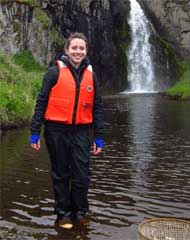
I was privileged to be one of the ITEP interns for the summer of 2017. For my internship I worked with the Qawalangin Tribe on the island of Unalaska, Alaska. My time was split between field work on Unalaska and lab work in Flagstaff, Arizona where I am currently a graduate student at Northern Arizona University in the Biological Sciences Department. I had a wonderful experience as an ITEP intern. This internship made it possible for me to complete the field work portion of my Master’s project looking at PCB contamination in the Aleutian/Bering Sea Region of Alaska and distinguishing between local sources of contamination from formerly used defense sites and contamination coming up to the Arctic via global distillation. I loved working closely with the indigenous people of Unalaska on work that has important local and broad implications. It has opened the doors for future opportunities and collaborations. I love to travel and experience new things. I got to have the experience of a lifetime this summer spending time in an area that not many people see and doing things that not many people get to do. The ITEP staff as well as my host site took great care of me and wanted me to succeed. This internship has allowed me to grow both professionally and personally. I’m grateful for the opportunities this internship has provided.
 Hailee Brown
University of Arizona, College of Pharmacy, Southwest Environmental Health Sciences Center
Tucson, AZ
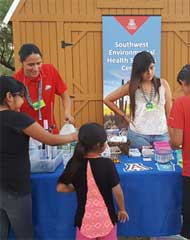
Yá’át’ééh! My name is Hailee Brown. I am Navajo and of the Towering House & Many Goats clans. This summer I was an intern through ITEP NAU at the University of Arizona, College of Pharmacy, Southwest Environmental Health Sciences Center (SWEHSC). I had a great experience at SWEHSC as I learned a lot about being a professional, understanding environmental health, and working in Indian Country. Throughout my eight-week internship there was never a dull moment as SWEHSC has many ongoing collaborations and projects. I traveled a lot attending outreach events, meetings, and research sessions throughout Arizona. SWEHSC collaborates directly with tribes as well as indigenous organizations throughout Arizona. Additionally, SWEHSC has strong ties with the Native American organizations on campus. Throughout the summer, I worked on organizing outreach events, planning presentations, and researching data concerning environmental health. SWEHSC recognizes and researches the intersection between indigeneity and environmental science. Some of the topics I focused on this summer included: air quality, asthma, sun-safety, oil spills, toxicology, education, environmental policy, and traditional tribal teachings. The ITEP organization was very supportive and helpful of my work with SWEHSC. I encourage other students to apply for an ITEP internship as they will have very memorable experiences and gain valuable professional skills.
 Steven Chischilly Jr.
Pechanga Environmental Department
Temecula, CA
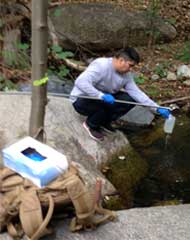
My internship experience was impeccable. Through ITEP I discovered other ascending tribal programs that are committed to the betterment of the natural systems. I extremely enjoyed the ability to move to another location, take up a task I am passionate about and meet other friendly goal oriented people. Experiencing the new location opened up my mind to new possibilities for my career. I got a taste of an employment opportunity that is incredibly viable for me.
The Pechanga Reservation is beautiful and a great bit of serenity nestled just outside of the urban community. The tribe has built itself up to a mighty position. The environmental department is always welcoming and has never failed to include me on important matters that surrounded the air program. Their input and conversations keep you well informed and any uncertainties are quickly sorted out in a friendly fashion.
The biggest takeaway from the Pechanga community is their focus on the youth. I was included in many activities that surrounded solely around the youth. It was very refreshing to see. I would not have traded the experience with ITEP and Pechanga for any other, it was an experience that will definitely leave an impression on me for the rest of my career.
 Shaun Hudson
Hopi Environmental Protection Office
Kykotsmovi, AZ
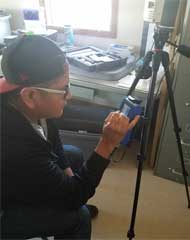
My name is Shaun Hudson. I’m a Navajo from a small community in Tuba City. I am a Graduate Student majoring in Climate Science and Solutions at Northern Arizona University in Flagstaff Arizona. I currently completed an internship with the Hopi Environmental Protection Office in Kykotsmovi which is a small community on the Hopi Reservation. My duties included conducting studies involving environmental health studies with random home sites around the reservation. My study was a collaboration project with the University of Arizona School of Public Health which addresses environmental health disparities (particulate matter, arsenic, and uranium), evaluating environmental risk and water quality (locally and regionally), and observe the potential leakage of uranium and heavy metal waste from local landfills which could impact community health.
I have always been interested in preserving and protecting our natural resources on Native American lands. ITEP has given me the opportunity to expand on my interests working with the Hopi Tribe and allowing myself to progress in a field that I have been interested in since I’ve entered the environmental science program at NAU. Working with ITEP and the Hopi Tribe has given me the experience necessary to succeed in tribal environmental protection as well as becoming knowledgeable with the procedures in tribal environmental policy. Using the knowledge obtained from my graduate year at Northern Arizona University, I was able to utilize my education and have an impact on the orders and concepts with the Hopi EPA. This internship has given me the confidence to succeed in the ever changing environmental issues surrounding Native American lands.
 Melanie Rose Keil
Big Pine Paiute Tribe of the Owens Valley
Big Pine, CA
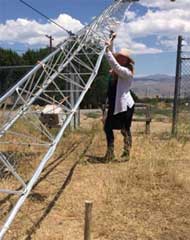
As an intern for the Environmental Department of the Big Pine Paiute Tribe of the Owens Valley, I spent the majority of my time conducting independent online research to develop curriculum for air quality and climate change environmental education outreach activities. I created lesson plans, worksheets, acquired, made, and tested materials for two hands-on, science based educational activities which I presented to tribal youth attending a summer session at the Tribal Education Center. My other major activity was planning and implementing a one-day field trip seminar designed to further tribal knowledge of local climate change vulnerabilities, mitigation, adaptation, and survival strategies. Additionally, on the technical side of things, I helped set up, take down and perform regular maintenance on the Tribe’s Emergency Beta Attenuation Monitor. I also helped to take down a meteorological station tower for troubleshooting and helped with the installation and set-up of a webcam that will eventually be used for live stream monitoring of air quality on the reservation. The internship gave me an idea of what working for a Tribal Department is like on daily basis and also provided me an opportunity to improve my interpersonal relationship skills and self-direction especially concerning time management and public speaking skills.
 Natalie Shaw
Central Arizona Project
Phoenix, AZ
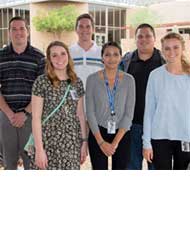
During my time as an intern at the Central Arizona Project (CAP) in Phoenix, Arizona I had various opportunities to apply my knowledge, in addition to opportunities to further expand it. As a soon-to-be graduate student, this had been especially beneficial to my growth as student and professional within the field of environmental science and policy. Throughout my internship, I was able to network with other Native American professionals in addition to non-native professionals that work in various fields of work. Some of my work focused on water availability to Tribes with claims to Colorado River water and the consideration of various scenarios of water use and their impacts to water users of this important body of water. I worked with some amazing people who mentored me during my internship and I hope to remain in contact with. Unlike a classroom setting, where learning is mainly based off of textbook and lecture learning, an internship teaches you through experience, experience that you can carry with you to future careers or internships. You also aren’t limited to work on one topic, and you get the chance to branch out and learn from other different topics. During my internship, I not only worked on a scenario analysis project, but I also had a chance to visit a pumping plant, attend the Arizona Indian Chamber of Commerce luncheon, visit several tribal communities in the greater Phoenix area, not to mention the many opportunities for free food which is always appreciated by a college student!
 Sherralyn Sneezer
Honor the Earth
Callaway, MN
Hello, my name is Sherralyn Sneezer, and I am Navajo from Shonto, AZ. I am attending Dartmouth College, majoring in Environmental Studies. My ITEP internship experience was very important, helping me grow immensely. I had the opportunity to work at Honor the Earth this summer, and it was experience I will not forget. Renewable energy, especially solar, has been one of main interests for quite some time, because I would like to help the Navajo Nation transition to more renewable energy. However, I was unsure how or where I would get my start in renewable energy. I became aware of the Environmental Education Outreach Program (EEOP) and found this internship program.
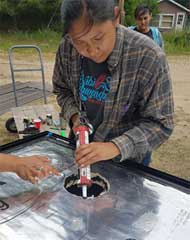
Arriving at Winona’s house, I was not sure what to expect or what exactly my job would be. For the first few days, I was eager to get started installing solar panels and get hands-on experience with solar. I kept hearing about all the amazing solar projects Honor the Earth was working on: installing solar PV at the local school, manufacturing solar panel furnaces (SPFs), installing solar panel furnaces on homes, and a solar panel furnace installation training for 30 women. However, I still was not sure where I should focus my time. Pam, Special Projects and Events Coordinator, started me off on researching solar panel furnaces and the DEED (Department of Employment and Economic Development) Grant. My task was to help coordinate the SPF training for 30 native women from Pine Point and Leech Lake Reservation. I made flyers and posted them around town, hoping to find any women interested in solar. Even though I was an intern, I took the lead on coordinating this training with Pam. It was such a rewarding experience coordinating the training, and learning how to install SPFs at the same time. I learned important lessons and skills coordinating this training that I could not learn at school. It was slightly stressful, but I enjoyed working with the women. In addition, I met many people who could help me in the future, like people from Rural Renewable Energy Alliance (RREAL). I felt empowered, realizing that I could do a similar training on the Navajo Reservation. This internship has allowed me to see the potential in my community, and work toward change, allowing people to learn new skills and potentially create jobs. I am thankful for my experience for this summer working as an ITEP intern, because I have learned more about what I would like to do in my community. I would love to continue working with ITEP for future projects. Thank you.
 Cydney Walters
Navajo Nation EPA Air Quality Control Program
Fort Defiance, AZ
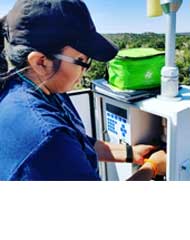
Shi ei Cydney Walters yinishe. Kinyaa’anii nishli doo Tsinjikini bashishchiin. Bii’ Bitonii ei da shi cheii doo Totsohnii ei da shinali. A’koteego Dine’ adzaan nishli. I am graduating from the University of Arizona in the spring of 2018, and spent summer 2016 in Washington DC doing an internship in the Geosciences Earth Sciences Department at the National Science Foundation in Arlington, VA. When making that transition from NSF to the Navajo Nation EPA in the Air Quality Control Program has been the most memorable and amazing experience, I have had. As an intern at NNEPA, I was able to travel to each of the monitoring sites, one in AZ and one in NM. I learned about how our air monitors work and how to calibrate and troubleshoot problems with the staff. I am a technician and I love to work with my hands and being able to work with the air monitoring systems was remarkable. I also got to take part in multiple outreach events in local communities at health and career fairs where I spoke to community members about the program and information we have on Open Burn. My main task for the entire summer was to create an outreach video addressing Open Burn, which is the burning of any household waste on the Navajo Nation and the issues caused by Open Burn, that covered topics from health effects to exempt activities. To anyone of you considering ITEP, or any other internship, I would strongly encourage them to take advantage of the opportunity. I learned a lot about the programs but myself as well. The opportunities are there and take advantage of it, it will take you far in life. I will continue to pursue environmental work and I hope to continue to work for the Navajo Nation and the community. I couldn’t have asked for a more amazing experience here at the Navajo Nation Air Quality Control Program. I couldn’t be anymore grateful and happy with this experience. A’xhee’, ITEP for this amazing opportunity.