

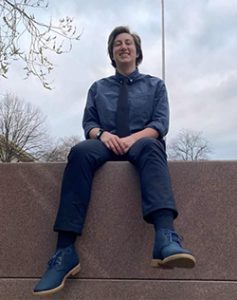
 Argen (Megan) Smith
EPA Washington, D.C. (On-Site)
This summer, I researched the effects of climate change driven air quality impacts on Indigenous communities in the continental United States at the EPA in Washington DC.
I considered temperature driven ozone and PM¬2.5 as well as PM2.5 from wildfires. I was also hoping to include Southwest dust and valley fever, but the datasets were not specific enough to separately analyze the effects on federally recognized Tribal land. Ozone and PM2.5 are temperature, emission, and weather dependent, so a changing climate effects their pattern of concentration in the United States. A previous paper produced projections of ozone and PM2.5 out to 2095 using climate data from two global circulation models (GCMs). Because of increasing temperatures and changes to the hydrological cycle, wildfires are predicted to increase in size and area as the climate changes. Another paper produced projections of PM2.5 due to these growing wildfires out to 2090 using 5 GCMs.
Using this data, I estimated the health impacts using the Benefits Mapping and Analysis Program (BenMAP) and separated out effects to federally recognized Tribal land in ArcGIS. With this data, I calculated the statistical significance of the difference in impacts between Tribal land and land not recognized as belonging to Tribes. I found that air quality effects on asthma exacerbation, reductions in activity, upper respiratory inflammation, and lost workdays all impacted residents of Tribal land significantly more than the rest of the United States. The other goal of my project was simply to quantify the effect of climate change driven air quality related health impacts on Tribes in the continental United States.
In my research this summer, I was given full flexibility and support to learn and research what I was interested in. My advisors were incredible teachers and there were many resources available. I also enjoyed exploring the neighborhoods, parks, and museums in DC.
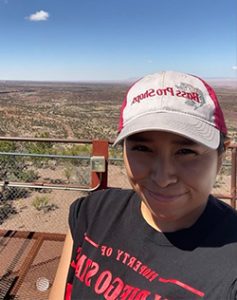 Camille Uentillie
NNEPA- Air Quality Control Program (Hybrid)
As I’ve completed my internship, I’m enrolled in my last semester as an undergraduate and the past few years, I have been learning much about the land and environment we live on. As a soon to be graduate with a degree but little experience in the environmental field, it can be overwhelming to find the right career. My internship with ITEP has been successful and opened my ideas with the many possibilities of what I could end up doing. I was not aware of the tribe’s departments, with air quality control program and operating permits program are a part a huge system that happens with global monitoring. Learning about the start and process of Operating Permits Program and Air Quality Control Program, I’ve understood both program work hard in hard to make sure air monitors are in great operation and facilities respect the air quality with the number of emissions they’re allowed to release. The employees explained with great details about regulations, their duties, and responsibilities to their program, and showing teamwork. My internship included researching about the air pollutants, understanding regulations the tribe has with the state, federal and government policies, traveling to check air monitors while replacing old filters with news ones and more.
I learned and grew from that past eight weeks interning under ITEP through the Navajo Nation tribe’s Air Quality Control Program and Operating Permits Program. Upcoming students considering internships with ITEP will have many questions, I assure you that your questions will be answered. The ITEP team will provide you the information from the start, throughout the end of the internship. My summer spent with the tribe taught me several things: the community elders love seeing students learning, understanding how the department works, a small community like AQCP and OPP cover a large portion of air monitoring. I saw the issues environmental issues occurring within the area and hope students know their passion for the land calls for environmental leaders. There are more opportunities coming up for OPP and AQCP, I hope to get to see student interns experience what the Navajo Nation and the other programs involving air quality has to offer through ITEP. I strongly recommend an internship with ITEP, I am happy with learning more about my tribe’s government and environmental department.
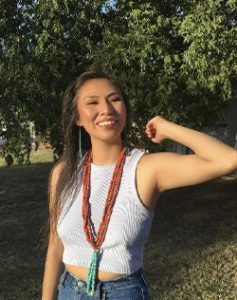 Clarene Davis
Earth Gen
(On-Site)
My internship at ITEP provided me with numerous learning opportunities. I learned a lot about air quality and how climate change affects indigenous populations. Historically, tribes have played an essential role in environmental issues such as air pollution and climate change. I kept a weekly journal of my experiences, which I shared with my host site supervisor. I am pleased to report that I had an entire team of host relatives, two head supervisors, and coworkers assisting and guiding me with any assistance or guidance required during this internship.
I enjoy working with Earth Gen and Whiteswan Environmental since I work with a non-profit organization, and I am considering remaining connected and perhaps working with them in the future, as well as working with them on both of their social media platforms. I appreciate Earth Gen’s encouragement in incorporating my own Navajo culture into the breathing easier curriculum by having me work on my graphic novel for the children’s comics and explain air quality within my creators’ narrative.
According to the EPA, tribal communities are more vulnerable to the effects of air pollution and have higher-than-average rates of diabetes, heart disease, and lung problems. Indoor air pollution has been related to a wide range of negative health impacts, including asthma, congestive heart failure, diabetes, and decreased cognitive performance.
My internship goals included communication assignments such as a PowerPoint presentation, brochure and video. In addition, I was a guest speaker for Whiteswan Environmental, where I discussed air quality with tribal property in Washington state. The most beneficial aspect of the learning experience, however, was the passion it inspired in me for the platform to work with Earth Gen, Moms Clean Air Forces, and Whiteswan Environmental, as well as the necessity for indigenous rights, particularly environmental justice for tribes.
Overall, I believe that this internship was effective in enhancing my understanding of a career in environmental science. I observed the stress of deadlines and the significance of being self-motivated. My host site supervisor is in charge of the academic subjects of my internship experience. This means empowering students in developing learning objectives, structuring academic reflection for the internship, and assessing student growth and learning. Earth Gen is urged to check my progress at the internship and to have strong communication on a regular basis, including dealing with me on what I need for my work and ensuring that I attend every field trip, work lunch, and zoom meeting.
ITEP is the ideal place to collaborate with the EPA and indigenous communities if you are interested in Indigenous rights and environmental injustice. Indigenous people are the last people on the globe who are still connected to Mother Earth’s operating system. It would be wise to pause and listen to us since, despite the fact that indigenous people make up fewer than 5% of the world’s population. We are responsible for more than half of the world’s natural resources. Social justice, indigenous rights, and human rights overlap with environmental challenges and women’s rights. ITEP students will be able to work with non-profit organizations, tribal communities, and travel to learn about air quality.
As a result, women are disproportionately affected by biodiversity legislation.
Indigenous women and environmental issues intersect. Indigenous women are rising to positions of leadership in their communities to fight for social justice, human rights, indigenous rights, and environmental justice. It is up to each of us to do our part to further the ideals of social justice for all. The ITEP internship program understands and can take the required steps to pursue chances, as well as learning how to self-advocate for opportunities in the industry, as well as in school and education, while keeping in mind where you came from.
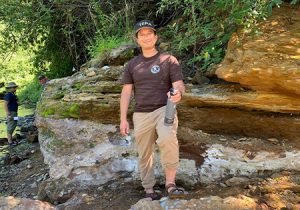 Franklyn Telles
Hoopa
(On-Site)
My ITEP internship experience provided me with the opportunity to observe first-hand the tasks of environmental professionals and learn the wealth of knowledge that makes a tribal organization sovereign, a self-sustaining organization with its own policies. I did my internship with the Hoopa Valley Tribe in California. My first objective was to track wildfires. At the same time, I did education outreach at various local venues, a health fair, grocery store parking lot, and a major annual event to demonstrate ways that the community could reduce smoke at home with low-cost and do-it-yourself air cleaners. The real test came when the forest near Willow Creek was struck by lightning. The tribe experienced the fire impacts of the nearby Six Rivers Lightning Complex fires, and I immediately prepared to work with various stakeholders like the Hoopa Fire Department and the Office of Emergency Services and regional air resource advisors to inform the community on how to mitigate smoke-induced poor air quality. I created daily briefs on the Facebook page of the Hoopa Fire Department and Office of Emergency Services to inform the community about the air quality in the valley.
I think prospective interns should select an ITEP internship that aligns best with their career goals. In every one of my learning experiences, it was an opportunity to ponder how best I could incorporate into my own graduate projects.
 Gabrielle James
US EPA GreenChill
Washington, D.C. (Virtual)
Yá’át’ééh! My name is Gabrielle James and I am a member of the Navajo Nation. Right before I started my Institute for Tribal Environmental Professionals (ITEP) internship, I graduated from Vassar College with my B.A. in anthropology and a minor in urban studies.
I spent eight weeks working with the U.S. Environmental Protection Agency Stratospheric Protection Division. I worked closely with my supervisor in the GreenChill program, which is a voluntary EPA partnership program that works with the food retail industry to reduce refrigerant emissions and decrease their impact on the ozone layer and climate change. Throughout my internship I was able to meet with staff members in the SPD, network within the EPA, and develop and work on projects collaboratively with my supervisors and SPD staff. The main project that I worked on during my internship was building a foundation for the GreenChill program to connect with grocery retailers on federally recognized tribal land. This included meeting with current GreenChill partners and stakeholders, outreach to grocery retailers on tribal land, and individual research about food sovereignty and grocery retail on tribal land. Through this project I was able to not only expand my own knowledge on grocery retail on tribal land and refrigerant emissions, but develop my networking and communication skills by meeting with EPA staff and GreenChill partners.
Prior to this internship, I knew little to nothing about refrigerant emissions but after eight weeks I was able to have an understanding of best environmental practices concerning refrigerant emissions and more environmentally friendly technologies. There definitely was a learning curve at the beginning of this internship, but with the help from my supportive supervisors and SPD staff I was able to ask questions and learn in a welcoming and encouraging environment.
I started this internship with wanting to learn more about working for the federal government and expanding my knowledge of environmentalism and sustainability at the federal level. This internship gave me an amazing opportunity to experience policy development and government functions. If you are looking at ITEP internships, I would definitely recommend applying because you will learn so much and gain experiences that you didn’t expect. This program has inspired me to continue pursuing a career working at the federal level and working with indigenous communities.
 Kaya Tate
Northwest Indian College
Belllingham, WA (On-Site)
My time interning at Northwest Indian College under John Rombold’s supervision was divided into lab, field, and extracurricular activities. A considerable amount of time was devoted to fieldwork, 1 – 2 times a week. Fieldwork activities included boat sampling, soil sampling, and assisting the Lummi Natural Resources Department in their invasive species reduction efforts. Soil sampling consisted of gathering 10 bags of soil from diverse locations on the Lummi reservation and in Bellingham, targeting biologically rich areas. The first set of samples were gathered from Birch Bay State Park, where I shoveled samples of dirt into bags, noting the precise coordinates and taking pictures of the site. This activity was completed 3 times throughout the internship, contributing to the primary lab project.
The primary lab project I worked on is called Science Education Alliance-Phage Hunters Advancing Genomics and Evolutionary Science (SEAPHAGES). Designed to be a process covering 2 semesters, it is an experiential research course that uses various microbiology techniques and aims to progress into genome annotation. The program studies bacteriophages The purpose of the program for me was to solidify my confidence in performing in a lab environment and to stimulate an interest in genomics and microbiology. This program is comprised of a “wet bench laboratory”, indicating a type of lab environment requiring the use of wet hazards and chemicals, so it needs to be meticulously designed and controlled to avoid contamination. This lab also introduced me to the field known as “bioinformatics”, an interdisciplinary study that develops methods for interpreting biological data. It can use the fields of biology, chemistry, physics, computer science, etc.
 Lauren Adeline Estrella
Alaska Community Action on Toxics (ACAT)
Anchorage, AK (Hybrid)
I spent this summer working mostly remotely for Alaska Community Action on Toxics (ACAT), a statewide environmental health and justice organization that empowers communities to eliminate exposure to toxics through collaborative research, shared science, education, organizing, and advocacy, all while supporting the rights of Indigenous peoples. The main focus of my work was to create a statewide map illustrating the different facilities in Alaska that release toxic air pollutants. The last two and a half weeks were spent in both Anchorage, AK and Nome, AK, where I helped ACAT with their Field Institute. This was a class taught to leaders from various communities about environmental justice, how toxins are affecting Alaskans, and how to be proactive with the use of various air and water monitoring devices.
Overall, this internship experience has been life changing. It has prompted me to ask more questions, engage with others, and share the knowledge I have learned. My time with ACAT has helped in me learn, grow, and has inspired me to teach my community and fellow Natives new ways to make a positive impact on the environment in ways that are relevant to them. I am beyond grateful for this experience and want to give a heartfelt thank you to Northern Arizona University’s Institute for Tribal Environmental Professionals SSI program for making this all possible. This will be yet another summer I never forget.
 Nizhoni Tallas
Climate Science Alliance
San Diego, CA (On-Site)
I highly recommend applying for an ITEP internship. When I was searching for internship opportunities, I came across this program and applied right away because they primarily focus on tribal communities and environmental topics. I thought the structure of applying was great too because you get to look at all the available host sites and choose which sites you would like to send your application to. Being able to have a choice in choosing from all the various tribal organizations was nice and a great way to learn more about other sites outside of your state that are also doing great work with tribal communities.
Even though it could be challenging to take that next step in your educational journey, ITEP makes it possible for you to have the support to take that step. Being able to travel and live in another state is an amazing experience and you learn a lot about yourself and at the same time work at a site that works with tribal communities. My experience living in San Diego for the summer was awesome. I met and learned from several tribes in the region which was so cool and fun. It also helped me see the impact that an organization like Climate Science Alliance can have on a tribal community when there is trust and meaningful relationships built. Also, experiencing firsthand what reciprocity looks like between an organization and tribal communities was beneficial and insightful since I will continue to work with my tribe and other tribes throughout my career.
During the summer I had plenty of time to join outreach activities, meetings, and projects that helped refine my skills in team building, writing, public speaking, and having confidence in myself. The team at Climate Science Alliance was incredibly supportive and gave me the freedom to work on projects that revolved around my interests. I’m sure the other internship sites part of ITEP are the same way. I say take that chance and experience something different and enhance the way you see the world and what you hope to become in the future.
 Teresa Topete
National Tribal Air Association
Flagstaff, AZ (Remote / Virtual)
For 8 weeks I interned with the National Tribal Air Association where I did research, designed cover pages, and got a glimpse of working with air quality policy. In my day to day tasks, I found articles and resources for our weekly newsletter and eventually learned how to use the website editing software to upload the newsletter onto the NTAA website. Outside of the newsletter and website design, I also got to do research on the various air quality policies NTAA provides Tribal organizations with resources for. EPA’s Clean School Bus Program is just one of many programs I researched and created resources for. NTAA’s commitment to helping Tribal organizations voice their public health needs and keep their communities protected has been extremely inspiring to me, and I am so grateful to have contributed to this crucial work that is being done. Additionally, I worked on a public comment letter regarding the Supplemental Environmental Projects or (SEPs) that was sent to the Department of Justice. Being a small part of this action to build a cleaner future has been so special and motivates me to continue in the field of environmental justice, as I pursue a career in environmental law and sustainability. I am so thankful for my experience as an ITEP intern, and encourage anyone interested in careers in the environmental field to consider this unique opportunity.
 Valerie Doornbos
Whiteswan Environmental (WE)
Seattle, WA (Virtual)
One of the main reasons why I selected Whiteswan Environmental (WE) as a host site was because I was intrigued, passionate about, and inspired by their commitment to 7th Generation Sustainability, cultural safety, and healing at all levels. My time as an intern only increased my passion for working on these topics. Shirley was an excellent mentor and I always felt supported and encouraged by her. My fellow WE interns were fantastic and amazing people!
I was fortunate enough to conduct a wide variety of projects and activities during my 8-week internship. Myself and my fellow interns successfully organized and hosted two community outreach and four speaker series events. The speaker series events topics were: Air Quality, An Introduction to the Northern Arizona University (NAU) Institute for Tribal Environmental Professionals (ITEP) Internship Program, Indigenous Knowledge and Air Quality, and finally, Community Programs and Air Quality. We also organized and collected 442 responses on our air quality survey, reaching people as far away as the United Kingdom and British Columbia. We created traditional language TikToks on the AirNow FLAG program using the tribal resource guide they provided. We also created a resource brochure based on questions people had asked in the survey, and emailed it out to respondents (a few paper copies will be distributed as well).
This internship has influenced my future choices for careers by solidifying my passion of collaborating with Native communities on environmental issues. Although I identify as non-Native, I truly believe it is important for everyone to work together because we all hold a puzzle piece of knowledge. If some voices are left out, we truly do not have a complete understanding of an issue, and therefore it becomes impossible to solve and often facilitates cultures of harm. If you are interested in the environment or collaborating with Tribal nations, you should definitely strongly consider applying for this internship. THANK YOU Shirley and my fellow WE interns for making this such a wonderful and informative eight weeks! Everyone should consider being a WE intern!
 Brooke Damon
USGS, Grand Canyon Monitoring and Research Center
Flagstaff, AZ (Hybrid)
Yá’át’ééh, shí éí Brooke Damon yinishyé. Ta’neeszahnii nishłį, Tsin sikaadnii báshishchíín, Tábaahá dashícheii, dóó ‘Ashįįhíí dashínálí. Hello my name is Brooke Damon, I am of the Tangle People clan, born for the Clamp Tree clan, my maternal grandfather is of the Water Edge’s clan and paternal grandfather is of the Salt People clan.
I am currently a third year student at Northern Arizona University majoring in Environmental Sciences with an emphasis in Biology and minoring in Chemistry. During my ITEP internship I was able to work with USGS and create an annotated bibliography that contains tribal interest and concerns over time in the Glen Canyon Dam Adaptive Management Program. Although this doesn’t seem very interesting or groundbreaking since the majority of it I spend reading and writing. Throughout the internship I was able to work closely with the scientists and researchers from USGS, join in on the GCDAMP work group meetings, and gain some field work experience. This experience is one I could not be more grateful for as it pushed me out of the box I put myself in and allowed me to grow. I could not have asked for a better summer.
 Chelsie Fowler
NAMLRD (Navajo Abandoned Mine Lands Reclamation Department)
Shiprock, NM (On-Site)
The ITEP internship that NAU was able to provide was an amazing experience for me because I was able to immerse myself in a new environment and learn new skills that will prove to be beneficial in the future for my chosen career: Environmental Engineering. Taking that step forward in trying something new has really paid off and is an experience that I will never forget. I am thankful to ITEP and the host site staff for allowing me to grow within a short time frame. I was able to pick up technical skills and learn more about the engineering project development process, which relates to my chosen career path.
The internship that I had the opportunity to work with gave me the chance to go out into the field, learn how to use new technology, and do administrative work. It has given me an insight to how work life is and what it means to be part of a company that helps out the Navajo community. Having an internship through ITEP has been very educational and cost effective because I was able to get paid for working, along with housing taken care of. Without this internship, I would not have been able to work with professionals, go out of my comfort zone, and gain new experiences that I can put on my resume. I am grateful for the opportunity I had this summer and the amount of time that everyone from the ITEP and host site were able to set aside to help improve myself.
The internship that I had was life changing and has encouraged me to continue on with my education so that I can give back to my community on the Navajo Nation.
 Christine Longjohn
The Nature Conservancy
Durango, CO (Hybrid)
Working with ITEP and NAU, I was able to get a position with The Nature Conservancy. A non-profit that can be very competitive to get an internship with. I wanted this to be my next experience for summer work, since returning to school. This internship opportunity has been an amazing experience. I was able to work with the TNC with multiple tribes in the area of the San Juan watershed as well as federal/state and other non-profit organizations that are working on managing the San Juan River. I was ready to strengthen my skills for my professional career. Needing a complex network to see the ins and outs of the collaboration work that would be across multi-district and management landscape.
The ITEP internship allowed me to work and use critical thinking to develop my proposals for future work on tribal lands. I was given a very broad need and had to narrow down information from my previous research and work I had been doing during my master’s program to integrate that into a proposal for TNC. My work with restoring floodplain connectivity is complex in the broader Colorado River Basin where returning the flows needed is looking harder to get with the increasing challenges of climate change and consumptive use. This gave me great organizational, critical thinking, development, communication, and outreach skills. Because of this opportunity, I was able to attend a wonderful in-the-field work development collaboration river trip, with tribal entities. This enhanced my mentors and peers for future opportunities in building a bridge. All of this helped me be prepared for my next job as a biologist helping tribal nations across the U.S.
These internships are hands-on experiences in some of the most competitive positions. They give you real-life professional experiences while creating the best opportunity to broaden your network. You will get the best chance to interact with other tribal leaders to build that connection and help further your careers.
 Fred Toins III
Navajo Nation Department of Water Resources – Water Management Branch
Fort Defiance, AZ (On-Site)
I was an ITEP intern in the summer of 2022 at the Navajo Nation Department of Water Resources- Water Management Branch in Fort Defiance, Arizona. In this internship, I was involved in a few projects that assisted Navajo nation communities with water, electricity, and crop production associated with irrigation, wells, lakes, and reservoirs. This internship gave the opportunity for Fred to help take on the responsibility to manage the Navajo Nation water resources for the benefit of present and future generations to sustain long term socio-economic development while protecting the nation’s sovereignty over its water.
Following the completion of my internship, I will say that this was overall the best decision I could ever make following graduation. It has prepared me and gave me experience of what to expect when working in this specific field of study. Not only have I gained experience, but it looks great on your resume especially if you don’t have any experience at all following graduation. After all, just having a college degree will not always secure you of a job, especially in 2022. Not saying an internship will secure you a job, but it will most certainly enhance your chances of being selected by an employer. As a result, you consider an ITEP internship that will give you not only a learning experience, but a better chance at success!
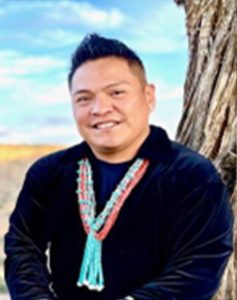 Joshua Mike
NASA Ames Research Center
Moffett Field, CA (Remote)
Yá’át’ééh (hello). My name is Joshua Mike. I am from Farmington, NM and am a member of the Great Navajo Nation. I am currently a senior at Fort Lewis College in Durango, CO and am studying Environmental Conservation Management. I am excited to share with you all why ITEP has been an important internship opportunity. I would like to first introduce to you ITEP’s mission: “ ITEP strengthens tribal capacity and sovereignty in environmental and natural resource management through culturally relevant education, research, partnerships and policy-based services. ” I have witnessed firsthand the manifestation of this mission statement with my summer internship placement. I was excited to participate as an active team member with the Bay Area Environmental Research Institute/NASA Ames Research Center. It is my strongest belief that when I was given the opportunity to work with NASA, ITEP envisioned that this NASA host site would nurture their interns in alignment with ITEP’s mission.
At NASA, I was welcomed in by a team known as the Indigenous Peoples Capacity Building Initiative (IPCBI). This team is cutting edge and is excelling with the work they do with tribal nations throughout the United States. IPCBI has been actively seeking opportunities to create workshop training sessions for tribal nations with an emphasis on using Earth Observations (EO) as a tool to provide data and knowledge. The IPCBI works with indigenous communities to promote ethical and culturally relevant space for the use of EO in monitoring, mapping, and managing natural and cultural resources. The foundations of the work that IPCBI does include co-developed workshops to ensure that challenges that indigenous people face can be helped with EO at the same time ensuring that equity and environmental justice is maintained for those indigenous communities. Both ITEP and NASA have provided me the challenge of researching, critical thinking, and fulfillment in my work as well as skillsets that I can employ in both academics as well as whatever career I choose soon.
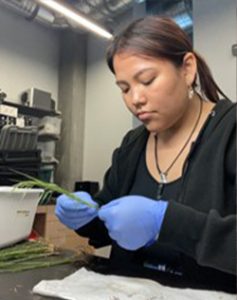 Karis Black
Chemistry Department, Northern Arizona University
Flagstaff, AZ (On-Site)
In the 10 weeks I worked in Dr. Jani Ingram’s lab I was exposed to research, field, and lab work. I worked with a variety of graduate and undergraduate students who are very intelligent, inspirational, and inclusive. Although I was one of the youngest, each member of the lab gave me advice about my career decisions along with resources that helped throughout their undergrad experience. I learned how to work with various lab equipment such as a microwave digestor and an Inductively-Coupled Plasma Mass Spectrometer(ICPMS). The procedures for each were confusing at first but towards the end of my internship duration, I understood how each system operated and had the ability to teach someone how to operate each.
I had the opportunity to travel to Yuma/Somerton, Arizona to observe Cocopah’s environmental protection officer do field sampling. Due to our Quality Assurance Plan(QAP) not being approved when Cocopah was doing their quarter sampling, we did not have the qualifications to take any samples back to the lab. Overall, the trip was fun, I had the opportunity to learn about another culture, try local restaurants, and went swimming. This trip was to scope out the sampling sites Cocopah utilizes so we can do our own sampling trip in the near future.
ITEP’s internship is a great learning opportunity that allowed me to explore my passions and have a better sense of what I want to do in my future career. I experienced what working in a lab is like and felt a sense of community while learning something new every day. I would recommend this internship to anyone who is the slightest bit interested in fieldwork and working in a lab!
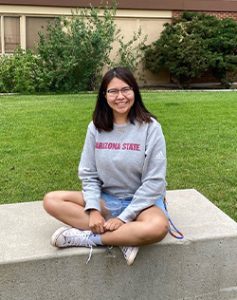 Moya Moses
Biology Department, Northern Arizona University
Flagstaff, AZ (On-Site)
Hello, my name is Moya Moses, I am a rising junior pursuing an undergraduate degree in urban and regional studies at Cornell University. This summer I interned at Northern Arizona University in Flagstaff Arizona. ITEP made the whole process incredibly easy and efficient from the application process all the way to arranging my flight back home. While I was out here I had the incredible opportunity to work with a group of NAU graduate students on a multitude of projects. Most of my work consisted of vegetation surveys, pollinator observations, and data entry. I was out in the field for almost the entirety of my stay, which meant a lot of sun and a lot of fun.
Some work highlights were doing almost 100 hours of vegetation surveys, learning a bunch of data collection protocols, and getting over my fear of bees and coming to find them cute! I also gained a great look into the lives of a range of environmentalists. I had a wonderful and truly enriching experience getting to know more about the field. I would strongly recommend an ITEP internship to anyone looking for a look into the world of environmental professionalism and hands-on skill building.
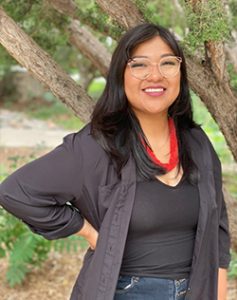 Myra Badonie
Biological Sciences Department, Northern Arizona University
Flagstaff, AZ (On-Site)
Yá’á át’ééh (Hello), I was given the opportunity to work as an intern for the Institute for Tribal Environmental Professionals (ITEP) for the summer of 2022. My project host site was based in Flagstaff, AZ at Northern Arizona University Biological Science Department, studying two invasive species in the Lake Powell reservoir that provides water for 38 million people (about twice the population of New York) in the Southwest including 22 tribal nations alone in just Arizona. Navajo Nation has extensive water rights in both the Upper & Lower basins of the Colorado River watershed, but over 40 percent of Navajo residents still lack access to running water. With the recent Navajo Generating Station closure in Page, AZ, Navajo Nation has proposed the water intakes lines be repurposed and to provide western agency residents with running water. The aim of the study was to conduct preliminary surveys around the southern and northern regions of the Glen Canyon Nation Park area, where population size was quantified and observe if there were habitat preference to different geological sediments where freshwater bivalve’s colonies are located. We conducted a series of samples based on population abundance or absence within a shoreline adjacent to where colonies once thrived.
This research gave me the opportunity to work independently and build relationships among the faculty in a research setting. This allowed me to improve upon my skill sets in data collection and experimental lab setups with living colonies. If you are to consider this opportunity, this experience will shape your ability to do scientific research in the lab and field site setting, along with learning multiple subjects of science that cannot be covered in a classroom setting. As I step into the next part of my academic journey, I am overjoyed with the new avenue of opportunities this internship has made available for me to take, and the amount of support from faculty and coworkers, helps me feel ensured I am on the right path.
 (Marissa) René Castillo
Navajo Nation Department of Water Resources – Water Management Branch
Fort Defiance, AZ (Remote)
Being an ITEP intern is a unique experience that overall, better prepared me as a scientist and student. Before ITEP, I didn’t have any real-world application experience of the science that I major in. This summer I worked virtually as an intern with the Navajo Nation Water Management Branch. I got hands on experience using remote sensing, hydrology, and GIS analysis together to help people and do cool science. I used this internship to grow and build a network of not only of my peers but of scientists in fields related to my interests.
What I learned from the experience was more than just science. This program developed me professionally in other ways, helping build presentation confidence, build coding and cartography skills through Google Earth Engine and ESRI GIS mapping, and leadership by teaching and working with another intern from a different science application field.
There are many virtual internships you can do, but if you have the flexibility and want to learn more about water management, I suggest the Navajo Nation Water Management Branch. You can build skills useful not just for the return to the classroom next semester but also for the work force all while serving others through knowledge and science. It’s a unique opportunity to work with mentors who care not just about the project you complete, but the development of you as a professional and as a scientist.
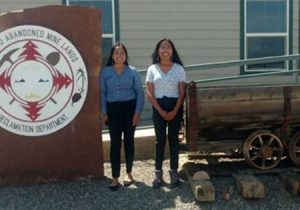 Shanya Whitehorse
NAMLRD (Navajo Abandoned Mine Lands Reclamation Department)
Shiprock, NM (On-Site)
With the help of ITEP, I was able to get an internship with Navajo AML in Shiprock, NM that has opened multiple opportunities. I came to Navajo AML with no knowledge of abandon mines, but I would casually see coal piles in front of local housing without a fence and a sign addressing its environmental and health hazards. It wasn’t until my internship that I realized this is a serious problem on the reservation and most Navajo people don’t know that. Without Navajo AML and its mentorship being able to teach me the history and the process of reclamation, I wouldn’t have known anything like this existed. I am thankful and excited to have completed this internship and encourage other students to pursue opportunities like this so they can have options after they graduate.
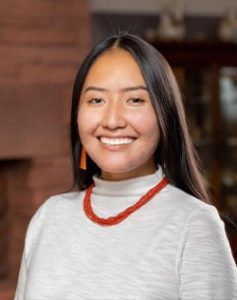 Tracey Begaye
Navajo Nation Water Management Branch
Fort Defiance, AZ (Hybrid)
I am an ITEP intern for the Summer of 2022 with the Navajo Nation Water Management Department based in Fort Defiance, Arizona. I researched a cloud-based web application – the Drought Severity Evaluation Tool (DSET) – to improve drought reporting and management in the Navajo Nation. I am reflecting on all the work I have performed during this internship program as I finish up my final week, and I am happy to have contributed.
Because I gained more expertise in remote sensing and hydrology, future interns should think about participating in the ITEP program. Additionally, my professional abilities have improved, which has prompted me to think about keeping my interest in remote sensing. I am relieved that I was able to use my coding knowledge and maximize my application of the available resources. For my summer project, I had the good fortune to collaborate with my supervisor Carlee McClellan and partner Rene Castillo. They both gave me in-depth hydrology knowledge and helped me work as efficiently as I could.
Brandee Joe
Center for Adaptable Landscapes / School of Earth and Sustainability
Northern Arizona University, Flagstaff, AZ (Hybrid)
This past summer, I had the opportunity to receive an ITEP internship. It was a great learning experience overall. A lot of the work I did was hands-on and that allowed me to better understand what I am capable of doing. It also made me become more interested in what I was learning. The individuals I worked with were very considerate and helpful. Not only did they help to increase my interest in the work we were doing, they also helped me in any way they could when I struggled.
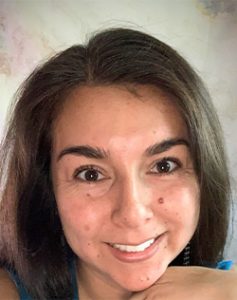 Lauren Adeline Estrella
Alaska Community Action on Toxics (ACAT)
Anchorage, Alaska (Virtual)
I believe the Creator intended for us to live harmoniously with the earth, not to pollute it with waste. I am a single mother and did not want my daughter to grow up having to accept “it is what it is”, which was one of the reasons why I had applied to the Environmental and Occupational Health master’s program at CSUN. I intend to use my background in biochemistry, skills in analysis of scientific research, and newfound knowledge to prove that our actions can influence the world for the better.
The ITEP internship made this goal a possibility. I spent 8 weeks working remotely for Alaska Community Action on Toxics (ACAT), a statewide environmental health and justice organization that empowers communities to eliminate exposure to toxics through collaborative research, share science, education, organizing, and advocacy, all while supporting the rights of Indigenous peoples. Over the summer, I was able to put my skills to work by conducting an immense update of the North Slope Report, which displays the top ten air pollutants in the North Slope Borough of Alaska. The health effects of exposure to these pollutants were researched and included in the report, and trends in air emissions were shown, along with comparisons to other states. This report is to be shared with tribal leaders and distributed amongst the Nuiqsut community, giving them solid evidence to help voice their concerns. I was also able to promote newly established programs by creating social media engagements for both Facebook and Instagram. Additionally, I created multiple factsheet and infographics on topics such as climate change in the Arctic, climate change and children’s health, air pollution sources and the economic benefit of mitigation, air pollution and breast cancer, and the limitations in the process of incinerating PFAS-contaminated soils. The support I received throughout the internship was phenomenal and is a prominent attribute of my time here with ACAT. Even though we were all working from different locations, it really felt like we were a family working together, which was extraordinary and refreshing. This support had me excited about my assignments, as it helped me strive to put in more effort and produce better work.
Overall, this internship experience has been life changing. It has prompted me to ask more questions, engage with others, and share the knowledge I have learned. My time with ACAT has helped in my learning and growth, and has inspired me to teach my community and fellow Natives how they can make a positive impact on the environment in ways that are relevant to them, starting with an Indigenous Wellness Cohort. I am beyond grateful for this experience and want to give a heartfelt thank you to Northern Arizona University’s Institute for Tribal Environmental Professionals Summer Internship program for making this all possible, even during a pandemic. This will be a summer I never forget.
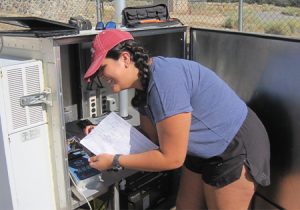 Rhonda Papp
Big Pine Paiute Tribe of the Owens Valley
Big Pine, California (Virtual)
My time in my ITEP summer internship with the Big Pine Paiute Tribe (BPPT) of the Owens Valley is one that is concluding my final chapter of personal growth within the last year. It is currently July 30th, 2021, and I am really reflective of the last year and some months of being in COVID-19’s grip of quarantine and how it has shaped me. In essence, I am truly grateful to have such a supportive team in the BPPT Environmental Department, ITEP, and through all the individuals I met and learned from this summer.
I worked directly with the Tribal Air Program Coordinator, Environmental Director, and Water Program Coordinator on coordinating, planning, and researching three main tasks. The first being researching and planning a poster making workshop for Big Pine youth on air quality and wildfire events. The next being researching and developing a green building article for community members to implement some “green building techniques” in their own home. Finally, I worked on developing and planning the BPPT Environment Department’s social media. My time has been spent doing meaningful and valuable work for the Big Pine Paiute Tribe of the Owens Valley. It offered a unique and necessary experience to work for a tribe and people who are resilient, powerful, and refreshing from my little world in San Diego. There is so much that we can learn from working in the field that we are interested in. My last eight weeks taught me that the only thing that is certain is uncertainty, and we should never force our expectations to match our reality. In all, I highly recommend that anyone interested in pursuing a career in environmental science pursue an internship with ITEP.
 Ayden Clytus
EPA Climate Science and Impacts Branch
Washington DC (Virtual)
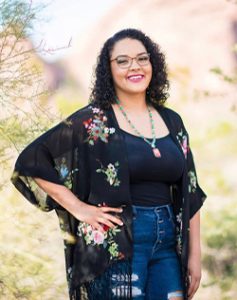
The saying that “time fly’s by when you’re having fun” could not have been more applicable to my summer experience. Within a span of 8 weeks, I had lots of fun and I grew so much as a person. I got to learn about numerous opportunities and concepts this summer that I had no idea were possibilities. When I first saw the ITEP summer intern program I did not think it was for me, a Justice Studies major whose world revolved around policy, law, and justice for others. However, my world also focused on the health of the Earth and our communities. I was stuck trying to understand how to combine the two. I have always had a respect for the land, what it gives to us, and what it teaches us. This comes from traditional values taught to me by my mother and grandmother. These values keep me grounded and have guided my path through education and my search for a future career. So, with encouragement from both parents, I decided to just apply for the summer internship and see where that went.
In the end I applied to four host sites, got two interviews, and one acceptance from EPA’s Climate Science and Impacts Branch. I was so excited but intimidated at the same time. I had this perception that EPA was full of scientists who just took samples and analyzed them, which some do, but this was not what the people I worked with did on a daily. I was also worried that since it was a federal government agency that they would be very strict and slightly unapproachable, and I wanted to make sure I impressed somehow. This was the complete opposite of the people I worked with. They were friendly, understanding, everything you would hope for in a colleague and I was beyond grateful for that. Rather than take samples and create reports, I read those journals and reports to understand climate change and how it would affect health, economy, and infrastructure for example. I was given three tasks; 1) build a CASTNET tribal program partners page for the EPA website, 2) Research climate change’s effects on the Arctic, which included the impacts on the health of Alaskans, Indigenous peoples, and economic impacts, and 3) write a paper on climate change nationally, its impact on water, and how that will ultimately impact children’s health and Indigenous people within the United States. In addition to my three projects, my three project leads introduced me to many different people who worked in areas I was interested in. Those areas of interest were water, law, how tribes and the federal government work together, and environmental justice. I met with people who handle climate policy, an environmental justice attorney, a woman who works on safe drinking water in EPA and has an interest in environmental justice work, and much more. Each of these individuals offered me different knowledge and advice for future work or paths I could take. Each of the meetings I had were enlightening in some way. I learned so much from the projects I worked on and the people I met whilst at EPA.
All in all, I would highly recommend considering an ITEP summer internship. Even if you feel like maybe you will not fit in with the host sites, like me, you would be surprised just how much you do fit in. This internship taught me so much and I met great people. You might just find the career that works for you. For a long time, I was trying to figure out how I could make a Justice Studies degree work in favor of my passion for a better environment and working with EPA showed me where my place could be. It reassured me that I was on the right path, and I have grown tremendously in only two months. So, if you are even considering applying for an ITEP internship, I say go for it, you never know where you will end up.
 Chantel Jones
EPA Region 3 – Air and Radiation Division
Philadelphia, Pennsylvania (Virtual)
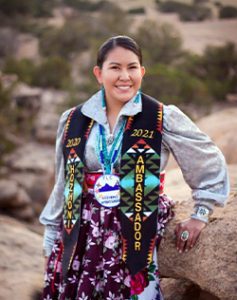
The Institute for Tribal Professionals has not only provided me with an excellent educational experience, but an opportunity to rethink my career path. While completing my internship, I was exposed to a positive learning environment in which I was encouraged to complete hands-on work that would be used heavily by my mentors. I was able to build many professional relationships with several tribal and environmental professionals, who not only valued my work and effort, but viewed me as an important and pushed me to learn more about what I am capable of. Much of my work included how to communicate with tribes, assess environmental needs, learn about health outcomes relating to poor environmental conditions, and how such issues can be resolved to improve the quality of life for all.
The ITEP internship is an excellent opportunity for all future environmental leaders to build their career and professional skills, while gaining real-world working experience to learn more about what their capable of accomplishing. To be surrounded by kind and empowering leaders is a one-of-a-kind experience that not many are able to come across. Since completing my time with ITEP, I have not experienced a career path change but have used each of my learned experiences in more ways than one. With much gratitude to the Institute for Tribal Professionals, I now hold the knowledge to help my community.
 Valerie Doornbos
US EPA Region 9 Indoor Environments Team
San Francisco, California (Virtual)
This internship was a wonderful experience! As an ITEP (Institute for Tribal Environmental Professionals) Intern, I worked with various tribes around Region 9 who have a IAQ (Indoor Air Quality) commitment in their GAP (General Assistance Program) workplan. I contacted them by phone or Zoom and offered to provide technical assistance, answer questions, and share additional resources. My supervisors at Region 9 provided me with a list of tribes who had these commitments in their FY 21 and 22 workplans. I then had my supervisors send out an introductory email, and then I followed up with an email where I introduced myself, described my project, and asked if I could ask them a few questions including how their IAQ work was going, the results of past projects, if they were aware of the FLAG program, and if I could provide technical assistance, among others. I then took notes during these meetings, and organized the data into a spreadsheet, where I was able to summarize it. There are currently a total of 36 tribes in Region 9 with IAQ commitments (25 in CA, 6 in AZ, and 5 in NV), and I was fortunate enough to speak with 24 of them, which is a roughly 67% response rate. I am so thankful that tribes were willing to speak with me, as it was their participation which made this project a success. I had access to numerous opportunities including trainings, webinars, networking, and agency meetings.
This internship solidified my interest in working in the environmental field, and I learned so much. I had the opportunity to complete hands-on work with tribes in Region 9, and I even presented my findings at the Regional Tribal Operations Committee (ROTC) meeting, and RIPSC (Regional Indian Programs Steering Committee) talk. I also briefed a senior manager and gave a brownbag presentation. I am certain that I will be able to use the information I gained here in graduate school and my future career. If you are interested in working for the federal government, or have a passion for collaborating with tribes, I highly suggest you look into an ITEP internship!
 Amanda Freele
USEPA Stratospheric Protection Division
Washington DC (Virtual)
Bozhoo (Hello)! My name is Amanda Freele, I am a member of the Sault Ste Marie Tribe of Chippewa Indians. I recently graduated from Michigan Technological University with my B.S. in environmental engineering and will be going back for my master’s degree.
This summer, I got the opportunity to intern through the ITEP program again. My host site was with EPA’s Stratospheric Protection Division (SPD) in which I worked with EPA’s GreenChill and Responsible Appliance Disposal (RAD) programs. Environmental justice/equity is gaining momentum within the EPA, which I was happy to be a part of. I was tasked with creating outreach material as well as engage with Tribal communities to talk about the RAD and GreenChill programs. Finding out what would benefit our Tribal communities and what they want to see, and then responding on those topics is how I found the best way to tailor my outreach materials. During my eight-week internship I completed some milestone projects like creating an outreach document for Tribes, holding a webinar for Tribal municipalities, utilities, and interested community members to learn about the RAD program, and creating a fact sheet with the target audience being Tribal communities for the GreenChill program. These are the ways I helped the respective programs work toward their equity goals. Because SPD is within the Office of Air and Radiation, I was able to learn a lot about what the EPA does in terms of regulating air quality concerns and what they are doing to implement new regulations.
During my experience I learned a lot about refrigerants and hydrofluorocarbons (HFCs). There are different kinds of refrigerants that may be better or worse for causing greenhouse gasses, as well as refrigerated appliance foams that may contain ozone depleting substances; both greenhouse gasses and ozone depleting substances lead to climate change. The EPA has voluntary programs for these issues, which allows their partners to go above and beyond regulatory standards to help combat against climate change. I had an amazing experience working for the Federal government. Not only did I work with a great team, I learned a lot from everyone and from weekly EPA learning sessions from outside of my division. I got an inside look at how the government functions and interplays with industry and communities. This experience is one that has truly broadened my knowledge on air quality and my interests in where I may work for my future career. I highly recommend the ITEP Internship Program to any Anishinaabe looking for a bright future in air quality, as this program has inspired me to focus my higher education in this field. Miigwech (Thank you)!
 Jonathan Credo
Northern Arizona University/Cocopah Tribe
Flagstaff, AZ / Yuma, AZ
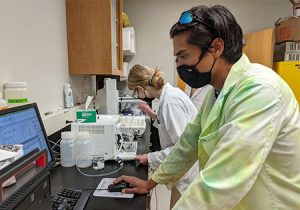
The ITEP internship is an excellent opportunity to provide interns of any level with introductory and intermediate experience with working with tribes and air quality. In my internship, I was given a significant amount of freedom that allowed me to learn what goes into being a successful scientist, including how to establish collaborations with tribal entities. I learned a lot about the environmental justice and environmental health issues that face the tribe that I worked with. I have worked with tribal and minority communities since 2010, and it is always a wonderful and humbling experience when establishing a new partnership. Environmental justice and environmental health issues are ever present, and it requires passionate individuals that are willing to work with in these communities if we are to change the world for the better. Interns should be aware that not all internships follow a rote set of directions and should be prepared to exercise a level of independence. All in all, I can only speak of good things from the paid internship.
 Gabrielle James
North Central Climate Adaptation Science Center
Boulder, CO (Virtual)
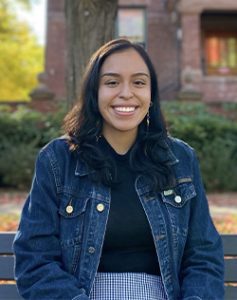
My name is Gabrielle James and I was an ITEP intern in summer 2021 with the North Central Climate Adaptation Science Center based in Boulder, Colorado. I spent eight weeks building a directory of climate adaptation plans and other environmental related materials from resources created by thirty-two federally recognized tribes in the Northern Great Plains region. In addition to that work, I did research on a couple of specific projects that tribes were working on such as beaver mimicry and research on how climate change impacts Native American health. I was able to strengthen my research and writing skills throughout the eight weeks I was an ITEP intern while working closely with my supervisor who is a professional in the field. While I was doing research, I was also able to meet and have conversations with other people who work in the field. Prior to this internship, I knew very little about climate adaptation planning efforts and the challenges that are presented in Tribal climate adaptation work.
Following the completion of the internship, I am entering my final year of my undergraduate education and I am strongly considering looking for and applying to jobs that are in related fields. As a Diné student about to graduate, this research experience was invaluable as I’m also about to write my senior thesis and final projects based on what I’ve learned through this internship. Future interns should consider an ITEP internship because my knowledge of Tribal climate adaptation work has increased more than I thought it would at the start of my internship, and I have a desire to pursue a career in a related field.
 Victoria Konen
Nez Perce Tribe ERWM Air Quality Program
Lapwai, ID
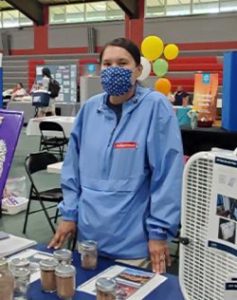
Hello, I am Victoria Konen, an enrolled Nez Perce Tribal member. This summer I worked with the Nez Perce Tribe Environmental Restoration Waste Management (ERWM) Air Quality Program under the Institute for Tribal Environmental Professionals (ITEP). I assisted the Program to increase awareness through culturally relevant air quality, science outreach, and education to youth and adults on the Nez Perce Reservation. I believe it is important to be a lifelong learner and open to new opportunities. I spent the first four weeks researching about the Air Quality Program and Nez Perce history. I attended the National Tribal Forum on Air Quality virtual conference during May 17-20. It was hosted by the Muscogee Creek Nation with the theme of, “50 Years of the Clean Air Act and How Traditional Wisdom Can Lead Us into the Future”.
A big takeaway from this internship is taking the information I have learned and applying it to my own family life. It started when I set up air monitoring equipment around my home. I utilized the PurpleAir sensors, Wynd Halo, and Wynd Tracker for indoor and outdoor monitoring. I would check the PurpleAir Map and Fire.AirNow.gov websites and analyze a week of Particulate Matter 2.5 (PM2.5) data. Particulate Matter is microscopic particles of solid or liquid matter suspended in the air. I noticed the air quality would go up when the air conditioning kicked on or at times when meals were prepared. It is a real eye opener to monitor your everyday habits and how it can affect family members with brief exposure to PM2.5. With all the information I discovered about wildfire smoke, I was able to translate that into a lesson for youth and adults. The lesson included a Coyote and Buffalo Bull Nimiipuu story, information about air quality and wildfire smoke, and a windsock activity. I presented to the Peck, Lapwai, and Craigmont Libraries, and the Boys & Girls Club of the Nez Perce Tribe youth and teens. I was very nervous presenting because I am not an expert of air quality, but the more I presented, the more I became comfortable. Every visit I had the children were welcoming and had great questions. The windsock activity related to the Prairie River Library Summer Reading Program “Tails and Tales” theme. I explained to the kids that windsocks are a measuring tool for wind speed and direction. I worked with the Nez Perce Language Program staff and elders to make an Nimiipuutimt AQI version. This was a fun project learning the words and creating an infographic. I gained knowledge and relationships that I will cherish for a lifetime. I was able to utilize my skills and cultural ties to enhance my internship experience. I recommend students to pursue an internship through ITEP to gain personal and professional development.
 Dondi Begay
Navajo Forestry Product Industry – Clean-up Advisory Group
Navajo, NM
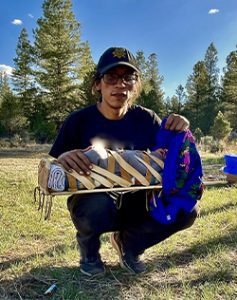
Ya’ah’teh! My name is Dondi Begay and I participated in the 2021 summer ITEP internship session. My work site was with the Navajo Forestry Products Industries Community Cleanup Advisory Group in Navajo, NM. The ITEP program recognizes the need for educated tribal professionals and provides a huge opportunity for young tribal members to experience the field of environmental science. The ITEP internship program gave me an opportunity to serve my community with the skills and knowledge I have earned as a student in a tangible and meaningful way.
If you are young native student pursing the field of environmental science, I would highly recommend participating in the ITEP program. ITEP is committed to serving tribal nations and addressing the environmental needs of our communities. The ITEP team will make you feel welcomed and at home while you and other interns dip your toes into the world of regulatory science. The program will open many doors to what you previously thought inaccessible and teach you invaluable professional and social skills needed in the workplace. I am grateful for the time I spent as an intern and will continue to build on the knowledge I gained whilst an ITEP intern.
 Clarene Davis
University of Alaska – Fairbanks
Fairbanks, Alaska (Virtual)
My experience with the ITEP internship was ripe with learning opportunities. I learned a lot about air quality and the effects of climate change on indigenous communities. Tribes have historically played an important role in environmental issues including air quality and climate change. Wood-burning stoves and wildfire smoke contribute to poor air quality for many Alaskans. These rankings highlight the importance of collaborating on ideas to enhance Alaskans’ air quality. One in four Native infants is hospitalized each year with acute respiratory infections. Substandard housing, overcrowding, poor indoor air quality, lack of indoor plumbing contribute to health problems in some indigenous communities. My objectives for the internship were communication projects: including a Power Point presentation, brochure, flyer, and video. Additionally, I was the guest speaker for Moms Clean Air Force and expressed the message of air quality in rural Alaska. However, the most valuable part learning experience is the passion it gave me about the Alaska Native and the need for indigenous rights including environmental justice for tribes.
As a whole, I believe that this internship was successful in furthering my knowledge of a career in the field of environmental science. I saw the pressure of deadlines, the importance of the value of being a self-motivator. ITEP staff is the people who oversee the academic components of the internship experience. This means helping students develop learning goals, structuring academic reflection for the internship, and monitoring the student’s growth and learning. ITEP mentors are encouraged to monitor the student’s progress at the internship site by communicating daily. If you are interested in Indigenous rights and environmental injustice then ITEP is the perfect place to work with EPA and indigenous communities. Indigenous people are the last people on this planet that are still connected to the operating system of Mother Earth. It would be very wise to stop and listen to us because although less than 5% of the population of this planet is of indigenous origin. We hold stewardship of over 50 percent of the planet’s natural resources. Social justice, indigenous rights, human rights, are also the intersection between environmental issues and women’s rights. Therefore, women are the most affected people when it comes to biodiversity laws. Indigenous people’s women and environmental issues intersect. Indigenous women rising to the position of leadership in their community to fight for social injustice, human rights, indigenous rights, and environmental justice. It’s up to each and every one of us to do everything we can to further the agendas for social justice for all. The ITEP internship program can navigate and explore job options, understands and can take the steps necessary to pursue opportunities, and understands how to self-advocate for opportunities in the workplace.
 Jeri G. Garfield
University of Arizona, Department of Chemical & Environmental Engineering
Tucson, AZ (Virtual)
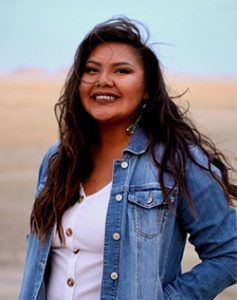
Yá’á’tééh (Greetings). My name is Jeri Garfield. Kin Yaa’aanii nishlí, Áshįįhí bashishchiin, Bit’áh’nii dashicheii, Kiłichinii eí dashinálí. Akot’ao éí Diné asdzáán nishlí. Interpreting the Diné language, I am of the Towering House People clan, born for the Salt clan, Folding Arms People are my maternal grandparents and Red House People are my paternal grandparents. In this way is how I am a Diné woman. I am a senior in the Bachelor of Public Health program at the Northern Arizona University. I completed the ITEP internship remotely with the University of Arizona, Department of Chemical & Environmental Engineering.
This internship allowed me to enhance my skills and knowledge in environmental-related research. My research title is “Analysis of Extreme Aerosol Events at Mesa Verde, Colorado.” This project aimed to identify the weekly, monthly, and interannual trends of PM2.5 extreme events at Mesa Verde, Colorado. I used the Interagency Monitoring of Protected Visual Environments (IMPROVE) monitoring data and Navy Aerosol Analysis and Prediction (NAAPS) chemical transport model to identify the sources of the extreme events. My host site mentors, Dr. Armin Sorooshian and Marisa Elena Gonzalez gave me the tools and guidance to succeed throughout the summer. Through the process, I have been able to learn about the role of fine aerosol particles, specifically particulate matter (PM2.5), and its significant public health and climate concerns. If you have a passion for the environment, it is possible that the ITEP internship might just be for you.
 Amanda Freele
Honor the Earth
Duluth, Minnesota (Virtual)
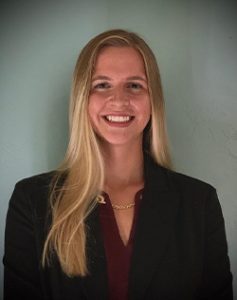
Summer of 2020… what a year, especially for me. My major is in Environmental Engineering. This field of study mainly encompasses water, soil, and air. The Northern Arizona University ITEP program offers a perfectly crafted blend of culture, air quality, and learning from a team that is passionate about the work they do. This was the opportunity that I have been waiting for!
For my ITEP Internship, I worked remotely with the host site Honor the Earth, based in Minnesota. Over the past two months I learned new information and expanded on skills I already possessed. I was in charge of researching information on topics related to fossil fuels to provide educational material for the public. I offered solutions and alternatives to dangerous chemicals being used in refineries. I also learned a lot about particulate matter and air quality monitoring systems through other interns and research. This internship has provided me an experience that cannot be found anywhere else. I got a first-hand look into the tribal communities and environmental activism in Minnesota and Wisconsin while working side-by-side with them on environmental rights issues they are currently facing. I know the work I have done this summer could potentially save lives through advocacy and help communities transition to a greener energy corridor.
The ITEP Internship offers a program truly unique. Not only did this opportunity add value to my career, but it helped shape me as a person. Now I feel confident that I can use my own uniquely creative, critical thinking skills to work through any situation. I would strongly encourage other students to apply and pursue this amazing opportunity with ITEP.
 Uziel J. Perez
University of Alaska – Fairbanks
Fairbanks, Alaska
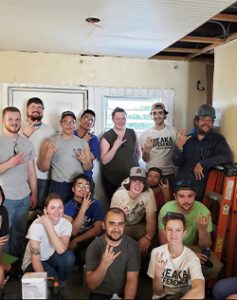
After I worked with ITEP, I gained a great understanding in the field that I am pursuing at my university in Fairbanks Alaska. I got the opportunity to work with such an amazing group of mentors and fellow interns on a matter that is very meaningful in our communities. The fact that I can have an impact on my community while also having fun doing it, is a very big plus for me. Other experiences that I have obtained whilst working with ITEP is a greater sense of professionalism with my work. The mentors that I had on my project really had me thinking critically about how to go about a task. That is something that I did not receive in other work environments. The mentors that put me under their wing are professors that have many years of experience working in this sort of field. That is one of the best things in an internship, getting placed under the supervision of someone who wants to pass on things that they have learned themselves over the course of their professional career. ITEP does a good job at that, all of the institutions that are partnered with ITEP are very welcoming, and only want to help me become a professional person in the given field. It is a program that improves the health of rural communities that lack funding from the government to improve the infrastructure of the community. I truly enjoy helping others, and this gave me the ability to do just that.
 Irvin Ledezma
Northern Arizona University
Flagstaff, AZ
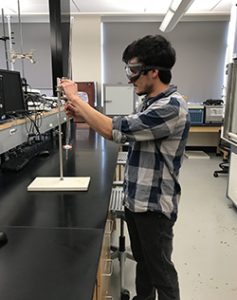
The host site for my ITEP internship was Northern Arizona University’s project on Cove, located on the Navajo reservation in northeastern Arizona. For background on the host site, extensive uranium mining was conducted on the Navajo Nation, with approximately 30 mines being in close proximity to Cove. While these mines are now abandoned, the contamination from these mining operations are still affecting the health of the local environment and the people who live on the Navajo Nation. Therefore, it is important to know how much excess uranium is in the environment and how is it being ingested by people or animals. My focus on the project was to measure the concentration of uranium and arsenic in soil samples from areas around Cove where livestock are commonly grazing. I prepared samples for analysis on an Inductively Coupled Plasma-Mass Spectrometer (ICP-MS). These samples would also be compared to soil samples from Cameron, Arizona, where uranium mining also occurred. We would also use this soil data and compare it to air quality data from the EPA and other partners with the university. The purpose of collecting this data is to determine if livestock are grazing in areas that have high uranium contamination. If they are, this could be a reason for the increased uranium found in the livestock at Cove. It’s a huge project and I feel honored to play a role in it!
I completed my bachelor’s degree in chemistry in 2018, and I felt certain I wanted to work in the field of environmental chemistry. However, I didn’t have any prior experience in the field. I started my master’s degree in chemistry in 2019 and had the privilege of being selected to work on the Cove host site. Even though the current pandemic shut down travel, the ITEP staff were still very accommodating and I still got to work on soil samples that were collected on the last trip to Cove. I learned a lot more about the environmental issues occurring on the Navajo Nation and I got a unique opportunity to make a difference in the cleanup around Cove. I encourage others to consider an internship with ITEP and learn how to perform meaningful work for the environment and for tribal areas.
 Natalia Cachora
USEPA Region 10
Seattle, Washington (Virtual)
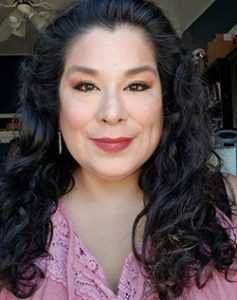
I am a member of the Fort Yuma Quechan Indian Tribe. I am a graduate student at the University of Arizona in the Master’s in Development Practice program, with an emphasis in Tribal Environmental health and justice.
My ITEP internship has been the highlight of my educational career as a graduate student. During my internship I was able to work with 2 amazing organizations that care about the health and wellbeing of Native American and Alaskan Native communities. My host site was EPA Region 10 and my mentor/supervisor is Ms. Kayla Krauss. ITEP and EPA region 10 has provided me with an amazing experience by introducing me to Road Dust management as well as acquainting me to several tribal partners that have concerns with road dust in their communities. And how tribes are working to mitigate these concerns. I also learned from my mentor road dust not only affects Alaskan Tribal communities but throughout the state of Alaska. Managing road dust is essential for reducing the exposure to Particulate Matter (PM) which affects air quality. Not only was I able to learn about road dust through this internship. I also was able to create a PowerPoint presentation explaining to school age youth, air quality as well as describing the effects of particulate matter on health. In this presentation we were able to make a homemade air sensor for these students using petroleum jelly and a paper plate. So, the student can see how clean their air was inside and outside of their home. Opportunities like these are great because this gives us students the experience, we need to enter the workforce prepared. Thank you ITEP staff and Partners for this opportunity!
 Hailee Brown
University of Alaska – Fairbanks
Fairbanks, AK (Virtual)
Yá’át’ééh! My name is Hailee Brown. I am Navajo and of the Towering House & Many Goats clans. This summer I was an intern with ITEP NAU at the University of Alaska Fairbanks. I had a wonderful experience being an intern. This summer I learned about Purple Air technology, wildfires in Alaska, and Native Alaskan communities’ air quality and public health. While working in Arizona remotely, I worked on various projects related to wildfires in rural Native Alaskan communities. I specifically focused on learning about and utilizing Purple Air technology to monitor the air quality in different communities. To familiarize myself with this technology I set up two Purple Air monitors, one on the Navajo Nation in my hometown of Coppermine, Arizona and another in Phoenix, Arizona. I encourage others to research Purple Air technology and to learn about how to use the devices to measure the air quality in your community.
Throughout this summer, I have learned how the air around us affects our overall health. Wildfires and dust can seriously interfere with us as humans breathing healthy air. And like my dad always says- good health is great wealth! So, monitoring the air quality in tribal communities is very important in the quest to improve tribal public health and wellness. This is my second summer being an ITEP intern. I encourage other students to apply for an ITEP internship as it is a great opportunity to gain hands-on experience working with tribal communities, do meaningful work, work with new technology, and learn about new cultures and people. I could not recommend the internship enough- apply!
 Jessica Smith
Institute for Tribal Environmental Professionals (ITEP)
Flagstaff, AZ (Virtual)
I am from Brimhall Nizhoni, NM and graduated at Crownpoint High School. I am continuing my education at Fort Lewis College. My major is Biology and minor in Studio Art and Environmental Science.
During my internship, I learned new ways of communication to groups of people. There are many ITEP staff that are working on keeping the air quality healthy to local communities. They are committed to helping their community especially to the reservation where there is lack of internet connection. I was happy to be part of the ITEP projects like the PurpleAir. I was assigned project to overlook QREST and PurpleAir, both are technologies are available for tribal staff to use. My objective is to first see the technical difficulties in the networking before introducing it to tribes. This internship is a good experience for undergraduate and graduate students, who are interested in environmental health for the public. Not only is ITEP internship is good career experience, but they also include Native American background in a work experience and she strongly encourage future ITEP interns to join in their projects and be involve with the community. I have helped her community with the ITEP’s monitor, PurpleAir, which is an outdoor or indoor device that does online streaming on the air quality.
 Josette Vigil
Nez Perce Tribe
Lapwai, Idaho (Virtual)
Hi! My name is Josette Vigil, a mechanical engineering student at Northern Arizona University. My interest in tribal work was sparked by my Ute Mountain Ute heritage, and my professional interest lies with sustainable agricultural design.
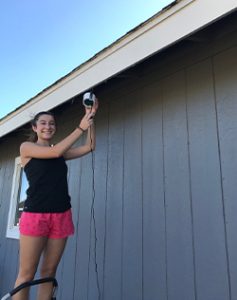
As an ITEP intern working with the Nez Perce host site, I learned so much about professionalism, remote outreach, and collaboration. I developed my professional communication skills through interagency, and even international meetings regarding air quality, education, sensing networks, and equipment. While I am very passionate about tribal work and environmental issues, I was concerned about the literal application of my work to my personal career goals. However, these doubts were quickly lifted. Not only is any professional experience for a student valuable, but I gained hands-on experience with crucial professional skills that are valuable in any discipline. Practicing community outreach, writing, and effective communication on projects are just a few examples of what this internship entailed. My mentors and superiors were all extremely positive and helpful. Their support and model of professionalism strongly encouraged me to pursue my passion of tribal environmental work. Also, they helped make this a very enjoyable summer. I loved working on outreach projects and getting hands-on experience with an air sensor. My favorite part of the internship was learning about the Nez Perce, or Nimiipuu, ways of life. Getting to know more about the Nez Perce tribe was a really enlightening experience for me, since most of my previous tribal exposure has been in the Southwest. I got to learn about different cultural practices and traditions, and even a little bit of language! I would highly recommend this experience to anyone looking to get involved with tribal environmental work. Gaining new insight into the professional world and exposure to the issues facing different regions has inspired and motivated me to persist in my educational and professional efforts, and through this position I was able to spark connections for future research and work.