
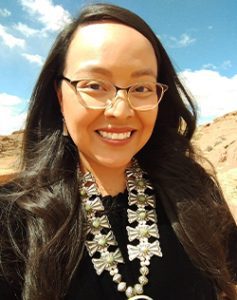
 Richelle Thomas
Choctaw Nation of Oklahoma (Remote)
My name is Richelle Thomas and I am Diné/Navajo. I am of the tangle people clan, born for zuni edgewater, my maternal grandfathers are the people of the waters flow together clan, my paternal grandfathers are the towering house clan. My maternal family is from GoldSprings Ranch, Arizona and my paternal family is from Indian Wells, Arizona. My research and professional interests are working with and for Indigenous communities.
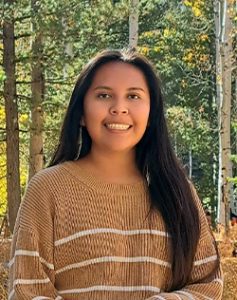 Chelsie Fowler
ITEP TAMS Center (Remote)
Yá’át’ééh! Shí éí Chelsie Fowler yinishyé. To’aheedliinii nishlí. Deeshchíiníi bashishchiin. Tse’njikini dashichei. Naasht’ezhí tábąąhá dashinalí. Akot’éego diné asdzáán nishlí. Chilchinbetó, Arizona déé’ naashá. Shí éí Kinłánídí NAU biziilgo ólta’ígii, ííníshta’. Environmental Engineer ba ííníshta’. Ahééhee’. Hello. My name is Chelsie Fowler and my four clans (kinship) are: Water Flow Together (mother’s clan), Red Streak People (father’s clan), HoneyComb Rock People (maternal grandfather), and Zuni EdgeWater (paternal grandfather). These clans are what shape me into a determined Navajo woman. I am originally from Chilchinbeto, Arizona. I also attend Northern Arizona University in Flagstaff, Arizona and am majoring in Environmental Engineering.
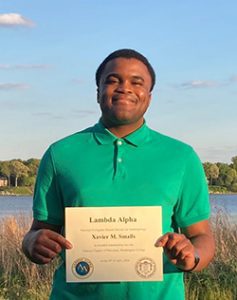 Xavier Smalls
EPA Tribal Children’s Health Air Quality, Climate Change, and Cultural Protections Washington, DC
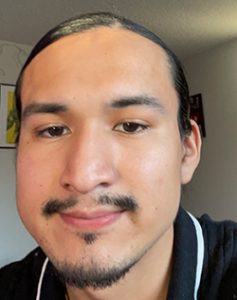
Hello, I am Xavier Smalls. I am a rising senior at Washington College in Chestertown, Maryland. I am currently a determined and hardworking double major in Anthropology and Environmental Studies with a minor in Museum, Field, and Community Education. My hobbies include music (specifically the clarinet, bass clarinet, and voice), nature, and writing. Through the Institute of Tribal Environmental Professionals program at Northern Arizona University, I am partaking in an internship at the Environmental Protection Agency’s Office of International and Tribal Affairs. In this internship, I’ll be helping to further research on how tribal children’s health is impacted by air pollution across the United States of America. While I am not part of a Native American tribe, I am passionate about the nexus between environment and human health/culture, specifically in tribal communities and communities that are home to minority cultures.
 Lymann Walker
EPA Tribal Children’s Health Air Quality, Climate Change, and Cultural Protections Lawerence, KS
Hello everyone, my name is Lymann Walker. I was born from the Buffalo clan of the Omaha people of Nebraska from Mother and Father sides. My grandmother Sharon is from the Sisseton Wahpeton Oyate/ Isanti people of Lake Traverse, South Dakota, and my grandfather who I namesake is from the Omaha people of Macy, Nebraska. I am the oldest of six siblings who I adore extremely. I am from Walthill, Nebraska, Sioux City, Iowa and Madison, South Dakota. In the future I plan to use what I learn here to help future generations by reintegrating traditional tribal foods and dietary standards to help combat the disparaging emotional and physical effects of processed and fatty foods in my Omaha community. I received my associates of liberal arts, and I am currently a junior in the Indigenous and American Indian studies program here at Haskell Indian Nations University.
 Claudia Galaida
EPA Office of Air Quality Planning & Standards (Remote)
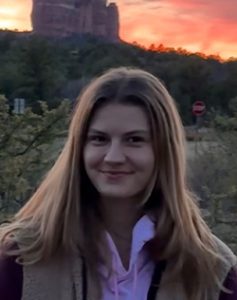
Hello, my name is Claudia Galaida, I am from Honolulu Hawaii, and have been raised in an amazing culture. I have a passion for the environment and nature with a goal to educate and make a change within sustainability. Being immersed in the Hawaiian culture I have been able to gain a deeper appreciation for the āina (land) and kai (sea). I am currently a student at the University of Arizona studying Sustainable Built Environments with an emphasis on sustainable communities.
 Franklyn Telles
Nez Perce Tribe Air Quality (AQ) Program Lewiston, ID
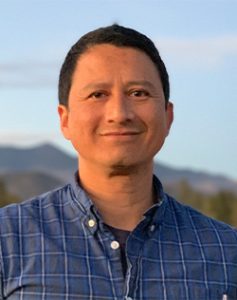
Dagoteéh Shi’keé Ndé! Hello everyone! I am Franklyn Telles, born of Mayan People of El Salvador (mother’s clan) and born of the People of the Red Paint of Apacheria (father’s clan). I am from Los Angeles, CA, and a citizen of the Chihene Nde of New Mexico. I am a graduate student at Northern Arizona University in the PhD program: Earth Sciences & Environmental Sustainability in Flagstaff, AZ, and a Fellow at the Cornell College of Agriculture and Life Sciences (CALS) in Ithaca, NY. I am researching the onset of colonial land use with dust accumulations in varves from Columbine Lake in the San Juan Mountains, CO, modern air quality in the southern Colorado Plateau, and geoscience education research to share my studies with Indigenous students on reservations and to study STEM identity activation. I completed my undergraduate degree at the University of California, Los Angeles (UCLA) and graduated with a Bachelor of Science in Geology. I completed my first graduate degree at California State University, Northridge (CSUN) and graduated with a Master of Science in Geology. I completed my second graduate degree at the American Museum of Natural History in New York City and graduated with a Master of Arts in Teaching Earth Science in Urban Schools.
 Liam Thompson
EPA Radiation Protection Division (Hybrid)
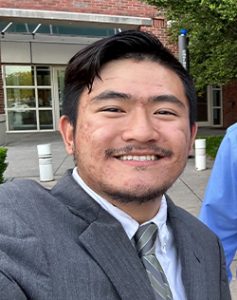
Liam Thompson is an undergraduate at the University of Oklahoma pursuing bachelor’s of sciences in meteorology and environmental sustainability. Liam has a strong passion for and been involved in a variety of research topics, including conducting a multi-level model evaluation of the CONUS404, looking at the relationship between equatorial sea surface temperatures and coffee prices, communicating uncertainty in the global climate models, Lead Author on case studies communicating on the ground land management projects and outcomes, and has even been a data quality analyst. Liam will be working with the EPA Office of Air and Radiation and is excited to learn more about the role EPA plays in mitigating and communicating radiation protection. Additionally, Liam is excited to learn more about what roles he could pursue at EPA in his future career as the organization embodies meteorological and environmental sustainability issues.
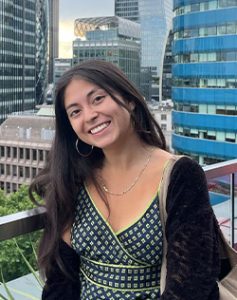 Teresa Topete
EPA Office of Transportation and Air Quality (Hybrid)
Hi, my name is Teresa Topete, and I am a tribal member of the Gila River Indian Community in Phoenix, Arizona. My mother is Indigenous and my father is Mexican, coming from Jalisco, Mexico. I am a current undergraduate student at Barnard College, in New York city, majoring in Urban Studies with an Environmental Science and Sustainability concentration. I am passionate about the intersection between ecological and environmental destruction and the impact this has on the health of people, specifically Tribal communities. I am excited to work with ITEP for a third summer in a row!
 Isabelle Walter
EPA – TAMS Center Las Vegas, NV
I am Isabelle Walter, I was born in Wisconsin, but have spent most of my life living in Las Vegas, Nevada. My family are Polish immigrants who came to America to escape WW2. I am not indigenous, but I’m passionate about social justice and serving my community. I attend the University of Nevada Las Vegas as an Earth & Environmental Science undergrad. My last research project was with the Desert Research Institute, where I studied how models and satellite images could be used to better understand how wildfire smoke plumes affect air quality in Nevada and California. I’m excited to continue my research on air quality with the TAMS program this summer.
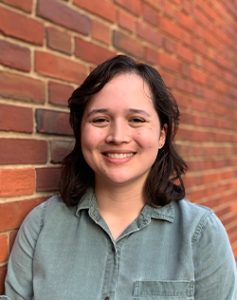 Blue Carlsson
San Carlos Apache Tribe Department of Environment Protection
(Hybrid)
Osiyo! My name is Blue Carlsson (they/them). I am a Shawnee citizen of the Cherokee Nation and I was born and raised in Houston, TX. I am a rising senior majoring in Environmental Engineering at Princeton University, with a focus on water treatment. As I prepare for my thesis research, I am studying the removal of PFAS (or “forever chemicals”) from drinking water. It is my goal to help improve water quality and access on reservations across the US, as clean water is a human right.
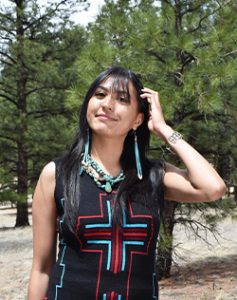 Taeler Whitehair
Navajo Nation Division of Water Resource Navajo Lake Capacity Study
Fort Defiance, AZ
My name is Taeler Whitehair and I am a Diné woman from Phoenix, AZ. I am studying Environmental Engineering at Northern Arizona University with a focus in sustainability and I enjoy participating in extracurriculars that focus on Indigenous inclusion within academic spaces. I wish to use my education to give back to my community as the pressures of environmental issues continue to rise. Ahéhee’!
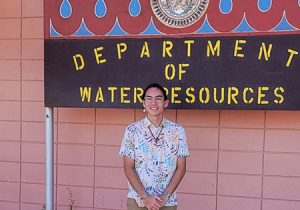 Colby Yazzie
USDA Forest Service – Coconino National Forest
Flagstaff, AZ
Yá’át’ééh. Ádóone’é nishłínigíí éíyá Bilagáana. Dóó Haltsooí’ éí bashishchiin; Tsii’łichíí Bilagáana éí dashicheii; Nat’oh Dine’é Táchii’nii éí dashinálí. I come from Among the Oak Trees on the Defiance Plateau of the Navajo Nation. This is how I am a five-fingered being. I am also a senior at Cornell University, majoring in Animal Science, concentrating in Applied Animal Biology and Interdisciplinary Studies, and minoring in American Indian and Indigenous Studies. My interests are in pastoralism and Indigenous grazing practices, specifically how Indigenous peoples’ animal systems do or do not adapt to rapidly changing climate, markets, and politics.
I look forward to working this summer with the USDA – Forest Services. Coming from the ponderosa pine forests of the Defiance Plateau, I find these ecosystems the most familiar. I hope to learn more about federal interactions with and preservation efforts of forests in the southwest. This is sure to be another fabulous summer working with the Institute for Tribal Environmental Professionals!
 Joshua Hedgecock
Springs Stewardship Institute
Flagstaff, AZ
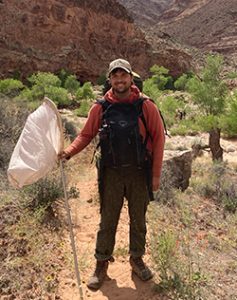
Hello, I am Joshua Hedgecock. I was born and raised in Farmington Hills, Michigan, part of 1836 ceded territory and the traditional ancestral land of the Anishinaabeg – The Three Fire Confederacy of the Ojibwe, Odawa, and Potawatomi Nations. I am currently a master’s student at the University of Michigan School for Environment and Sustainability, where I study Ecosystem Science and Environmental Justice.
For my master’s project, I am working with the Sault Ste. Marie Tribe of Chippewa (Ojibwe) Indians on the development of a framework for the restoration of manoomin (wild rice/Zizania palustris) habitat across the Great Lakes region, with the explicit goal of ensuring all Anishinaabe peoples can grow, harvest, and steward manoomin for generations to come.
 Autumn Powell
Navajo Nation Division of Water Resource Navajo Lake Capacity Study
Fort Defiance, AZ
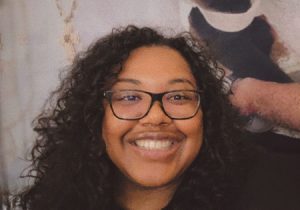
Yá’át’ééh shik’èí dóó shidine’è, Shí éí Autumn Powell yinishyé, Naakai Dine’é nishłį́, Na’ahiłii bashishchiin, Tsi’naajinii dashicheii, Naahiłií dashinalí. Ákót’éégo Diné Asdzání Nishłį. Tségháhoodzání déé’ Naashá. Hello, I am Autumn Powell, born to the Mexican People (mother’s clan), born to Black/African American (father’s clan), my Cheii (maternal grandfather) is from the Black Streak Wood People, and my Nalí (paternal grandfather) is Black/African American. I’m a Diné woman from Window Rock, Arizona.
I will be graduating this spring with my master’s degree in the Geography and Environmental Systems department at UMBC, marking a significant achievement in my academic journey. My thesis project, conducted through the Interdisciplinary Consortium of Applied Research in the Environment (ICARE) program, delved into the complex issue of whether environmental organizations contribute to the colonial legacy of erasing the presence of Tribal Peoples in Maryland due to a lack of engagement with these communities.
I completed my undergraduate studies at Haskell Indian Nations University, where I earned a degree in Environmental Science, laid a strong foundation for my research interests and passion for addressing environmental justice issues, particularly concerning Indigenous communities. As I move forward, I’m excited to continue my educational journey at the University of Kansas, where I’ll pursue a doctoral program in Geography and Atmospheric Science. This next step allows me to deepen my understanding of environmental dynamics and further explore ways to promote inclusivity and equity in environmental research and policy.
 Mariessa Fowler
Cocopah Tribe and NAU Water Policy
(Hybridl)
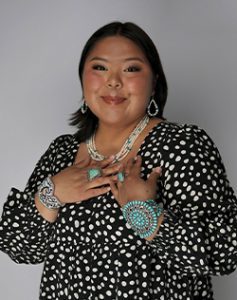
Yà’àt’ééh, my name is Mariessa Fowler. Naashashí nishłį́ dóó Tł’ááshchí’í ’éí báshíshchíín dóó Nát’oh Dine’é Táchii’nii’éí dashicheii nááná Naadą́ą́’ łigai Naasht’ézhí dine’é dashinalí. I am born of the Bear Enemies clan of the Tewa people, born for the Red Cheek clan, my maternal grandfathers are of the Tobacco Red Running into Water clan, and my paternal grandfathers are of the White Corn Zuni people. I am from Coppermine, AZ which is a community on the Navajo reservation near Page, AZ.
I am going into my fourth year at Northern Arizona University and am pursing an undergraduate degree in Environmental Science. I have an emphasis in policy and administration. My main focuses are within indigenous communities and the environmental issues that impact them. I love to learn about water policy, land management, forest management, and air quality issues. I have a passion for learning about different cultures and exploring their homelands. I hope to pursue a career within EPA or Navajo Nation EPA. Ahéhee’ nitsaago!
 Brooke Damon
Grand Canyon National Park Traditional Ecological Knowledges/First Voices
Flagstaff, AZ
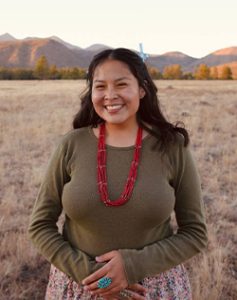
Yá’át’ééh, shí éí Brooke Damon yinishyé. Ta’neeszahnii nishłí, Tsin Sikaadnii bashishchiin, Tábááhá dashícheii, ‘Ashįįhíí dashínalí. Hello, my name is Brooke Damon born to the Tangle people clan, born for Clamp Tree clan, my is maternal grandfather is the Water Edge clan and my paternal grandfather is the Salt people clan.
I just recently graduated in May from Northern Arizona University with a Bachelor’s of Science in Environmental Science with Emphasis in Biology and a minor in Chemistry. I have experience working with the USGS, ITEP’s Tribes and Climate Change Program, NAU’s Sedimentary Record of Environmental Change Lab, The Nature Conservancy, and the Hopi Tribe’s Water Resources Program. I’m super excited to be working with the Grand Canyon National Park through the Traditional Ecological Knowledge/First Voices Program this summer! Ahéhee’, thank you!
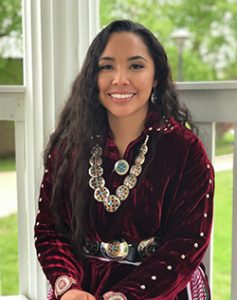 Sophia Honahni
USGS/NAU Digital Archaeology Lab
Flagstaff, AZ
Yá’át’ééh shik’èí dóó shidine’è, Shí éí Sophia Honahni yinishyé, Áshįįhi nishłį́, Ta’neeszahni bashishchiin, Honanwungwa dashicheii, Iswungwa dashinalí. Hi everyone, my name is Sophia Honahni. I am half Navajo and Hopi from Northern Arizona. I am a recent graduate dual enrolled at Haskell Indian Nations University and the University of Kansas where I received my Bachelors in Environmental Science. I am currently working with the NAU Archeology Lab and USGS in Flagstaff, Az, very excited for the rest of the summer!
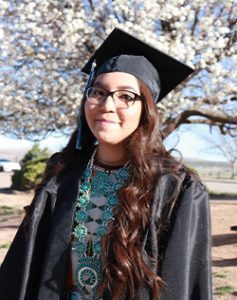 Tynya Kee
Ecological Restoration Institute
Flagstaff, AZ
Yá’át’ééh shí éí Tynya Taylor Kee yinishyé. Tódík’ǫ́ zhí nishłį,́ Tł’ízí Łání bashishchiin, Naakai dashicheii, dóó Ma’ii Deeshgiizhinii dashinalí. Ákót’éego diné asdzáán nishłį.́ Old Cedar déé’ naashá. Shimá dóó shizhé’é éí Tanya Begaye dóó Tyrone Kee wolyé. My name is Tynya Kee. I am of the Salt Water clan (mother’s clan), born for the Many Goats clan (father’s clan), my maternal grandfather’s clan is the Mexican clan, and my paternal grandfather’s clan is the Coyote Pass clan. In this way, I am a Navajo woman. I am from Old Cedar in Pinon, AZ, located on the Navajo Reservation. I am a student at Northern Arizona University pursuing a Bachelor’s of Science in Forestry.
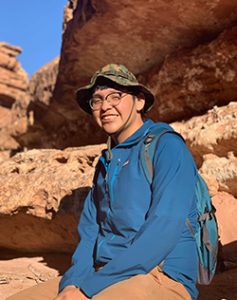 Matthew Begay
Dine College
Tuba City, AZ
Hello, my name is Matthew Begay I am 23 years old, and I am from Tuba City, Arizona. I am currently a student at Dine College. I recently was attending an internship with ITEP for the past few months. It has been a good experience; I got to try and learn new things and meet new people. I think people should consider an internship with ITEP if they are interested in making new memories and meeting new people with similar interest. I appreciate this opportunity that I have been given and am excited to be continuing for summer.
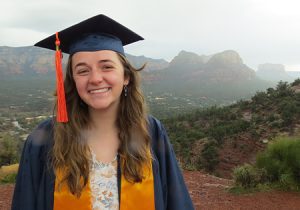 Caroline Reed
Cocopah Tribe/NAU Water Quality
Flagstaff, AZ
Howdy, my name is Caroline Reed. I am originally from Colorado, but came to NAU to pursue an undergraduate degree in environmental engineering. I graduated with my B.S. in May 2024 but will be staying around to get a M.S. in environmental engineering as well. My research is aimed at analyzing the abundance and diversity of microbial fungal communities in groundwater, surface water, and tap water for the Cocopah Tribe.
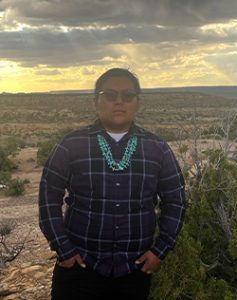 Arion Sahneyah
Hopi Department of Water- Water Infrastructure
Kykotsmovi, AZ
Nu haaliyti. Nu’ Tsotsmintiyo yan Hopi matsiwah. Pu piw oviee pahan tuni Arion Sahneyah, pahan maastiwah. Nu’ Piqos’ wuhngwah, pu piw kookyang wuhngwah. Nu Soo’gno pah ng’aa kuh.
Hello, my name is Arion Sahneyah and I am from the Hopi Tribe. My Hopi name is Tsotsmintiyo, my Hopi Clans are Bear Strap and Spider, I am from the village of Soongopavi. I am currently an undergraduate at the University of Arizona pursuing a Bachelors of Science in Computer Science.
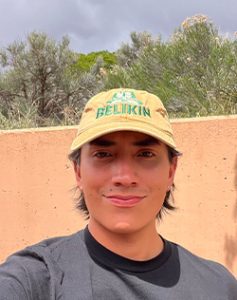 Tayan Benson
Riparian Vegetation Program- USGS Grand Canyon Monitoring and Research Center
Flagstaff, AZ
Hello, I am Tayan Benson. I am from Gallup, NM and my tribes are Tohono Oodham, Dine, and Lakota Sioux. I am an undergraduate student at Embry Riddle Aeronautical University in Daytona Beach, FL. My major is computer engineering and with my degree, I hope to contribute to environmental solutions that integrate traditional practices with modern science!
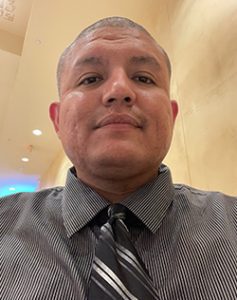 Joshua Massey
The Southwest Biological Science Center/BIA Wildfire Risk Assessment
U.S Geological Survey (Hybrid)
Hello, my name is Joshua Massey, I am from the White Mountain Apache Tribe. I am a Fire Archaeologist for the Bureau of Indian Affairs and currently a Graduate student at Arizona State University in the Emergency Management Program. I did my undergraduate studies at Northern Arizona University in Interdisciplinary Studies. I look forward to contributing my fire experience and knowledge for the continuation of mitigating and protection of cultural and natural resources and helping tribal communities.

 Mariessa Fowler
Big Pine Paiute of Owens Valley Air Quality Internship
Big Pine, CA
The ITEP program was able to broaden my understanding of tribal affairs, educate me on the variety of environmental issues that different tribes face, and how important it is to have Indigenous people in the environmental field.
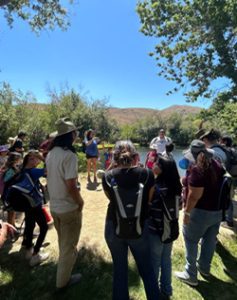
I had an amazing time with my mentors at Big Pine, CA and couldn’t have had a better experience. I was educated on air quality, native plants in California, the dust issues in Owens Valley, and other environmental issues that occurred in this area like groundwater pumping. I worked with many professionals who were passionate about their areas of focus and who were tremendous teachers. I was able to work with the tribal youth in different programs that involved gardening and outdoor reconnection. I was able to communicate with tribal members about their knowledge concerning air quality and what they wanted to see from the environmental department in the future. I also was fortunate enough to hear about Owens Valley’s Paiute history, culture, and teachings from elders or knowledge keepers.
My knowledge concerning native plants has expanded to a great extent and I am excited to apply all these details back home in my community. Not only did I learn a plethora of information regarding different subjects, but I also built lasting relationships and got to explore the beautiful landscapes across the Eastern Sierras. I was able to visit Yosemite when hardly anyone was in the park and was able to walk around with no vehicles. I also got to see the Ancient Bristlecone Pine Forest and visited Mono Lake. Not only did I get the scientific background on these places but the cultural history as well. The cross-cultural exchanges that occurred during this time were very eye-opening and incredible as well. I was able to understand how a smaller tribe operates and what kind of issues they face. I hope you join an ITEP program and are able to have phenomenal experiences.
 Melayna Patton
Navajo Nation EPA – Air Quality Control Program
Fort Defiance, AZ
Yá’át’ééh! My name is Melayna Patton and I am a member of the Navajo Nation. For my internship experience, I had the special opportunity to intern for the Navajo Nation Environmental Protection Agency, under their Air Quality Control Program in Fort Defiance, AZ. Admittedly, before starting my internship, reading about the position was especially intimidating. I felt like transitioning into such a sophisticated, well-rounded work environment like NNEPA would be incredibly difficult. Not only because of the lack of experience I had with the environmental aspects of my Nation, but because of the responsibilities. that came with it. For the most part, I was frightened at the idea of not living up to what I could accomplish. But even so, I withheld that sentiment and applied for the internship, and I could say I will never regret it.
Undoubtedly, being here at NNEPA has accumulated to being the climax of my year. The staff have been welcoming and inclusive to me about learning their programs responsibilities and missions. As a result, in the course of two (2) months I have familiarized myself with their intent of protecting the health, environment and welfare of the Navajo Nation. I have also managed to appreciate their leadership in guiding me throughout the internship with informational reading sources regarding our duties of understanding environmental regulations and stability. Namely, understanding acts, reviews, and essential permits. But to briefly conclude my experience, I did end up living up to what I could accomplish and more. I became a better person and I have gained an immense amount of knowledge. Without a doubt, it was a shift in my surroundings, but I have gained so much experience in working with environmental regulations that I would have not known if I hadn’t joined. For this reason, I am thankful I did. It not only helped me increase my expertise in policy implications but also getting to know what obstacles my reservation faces. But to say the least, interning at ITEP is an educational opportunity I will never forget.
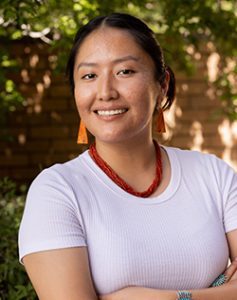 Tracey Begaye
Four Corners Science and Computing Club
(Flagstaff, AZ)
My name is Tracey Begaye. I am a part of the Navajo Tribe from Gallup, New Mexico. I had the pleasure of participating in ITEP’s Air Quality 10-week internship with the Four Corners Science and Computing Club (4CSCC). 4CSCC is a program focused on building awareness of and interest in computers in science. Their target audience is middle school through college students at schools primarily or largely serving Native American populations. The long-term goals of the program include increasing the representation and inclusion of Native Americans in open-source scientific computing.
I incorporated two sensor kits, the Raspberry Pi Pico and PMS5003, into a weather station set up for the workshops organized by 4CSCC. These sensors serve specific functions related to enhancing the capabilities of a weather station. I 3D designed a Stevenson Shield, an instrument shelter, to prevent damage to the power and air quality monitoring sensors that will be attached to a weather station. I had the exciting opportunity to collaborate with a weather kit that brings the wonders of scientific computing directly into the classroom. Notably, at the conclusion of each workshop, the computers and software are left in the schools, ensuring that students not only gain valuable experience but also pave the way for future generations to access these remarkable resources.
Seize ITEP summer internship opportunities to acquire valuable experience while simultaneously contributing to the betterment of Native American communities.
Colby Yazzie
Navajo Nation Department of Water Resources – Water Management Branch
Fort Defiance, AZ
My name is Colby Yazzie. Ná’oolk’iłí Tsoh Bilagáana nishłí; Haltsooi’ bashishchiin; Tsíí’łichíí Bilagáana dashi cheiil; Nat’oh Dine’é Tachii’nii dashi nálí. I am from Sawmill, AZ. I am currently a rising senior at Cornell University where I am majoring in Animal Science with a concentration in applied animal biology and interdisciplinary studies. I am also minoring in American Indian and Indigenous Studies. However, my real study interests are in rangeland management/conservation and grazing practices of global Indigenous People. With this in mind, I applied to work with the Navajo Department of Water Resources – Water Management Branch to learn more about how water, in the forms of lakes and rivers, is managed in this high-elevation arid environment. To fully understand the status of the rangelands on the Navajo Nation, I think it is crucial to understand the water which hydrates these lands and the life forms on it.
While working with the Water Management Branch, I was fortunate enough to experience Lake Capacity Surveying, Lake Differential Leveling, various community outreach events, and Crop Inventory along the San Juan River. These projects have taught me invaluable skills in GIS software, data collection, and professional interactions with community members. The highlight of my internship at the Water Management Branch was being able to spend time and get to know the other interns. Being able to learn alongside these formidable individuals was inspiring. Long days in the office or the field, basically every day, allowed us to learn about each other on a personal level. We all have our own dreams and goals, but we share similar passions and strong motivations.
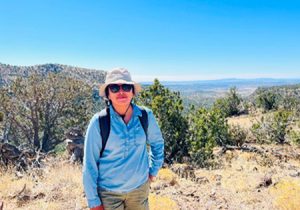 Malynndra Tome
Navajo Nation Department of Water Resources – Water Management Branch
Fort Defiance, AZ
Through the Institute for Tribal Environmental Professionals (ITEP) and its funders I was given the opportunity to work at the Navajo Nation Department of Water Resources – Water Management Branch.
This summer was spent assisting our supervisor complete projects concerning the management of the Navajo Nations water resources and to help quantify the Nations water resources for water rights activities. Projects such as Lake Capacity Surveying for lakes and reservoirs on the Navajo Nation, Differential leveling, and the annual San Juan River Basin Crop Inventory. We also assisted with the ongoing Westwater Project, to help bring water and electricity to the small Navajo community of Westwater in Utah.
These projects gave us a lot of field work experience and lots of hands-on experience with ArcGIS mapping. It allowed us to work with other professionals within the department and other professional entities, as well as other interns, where we built great teamwork and communication skills. All of which helped us complete projects in a timely manner. It also gave us the opportunity to work with the communities and community members in which these projects were conducted.
I am thankful for this opportunity to develop my professional work experience and hope to take these skills on with me as I continue my education and one day my career in the environmental sciences.
Franklyn Telles
U.S. Geological Survey
Tuba City, AZ (Virtual)
I enjoyed the collaboration and content development of education outreach materials and presentations at Tuba City Junior High School where most of the students are Navajo and Hopi. The collaboration occurred with the support of ITEP and the host site program from the United States Geological Survey, Reston, Virginia office of Youth and Education in Science and the facilities in Flagstaff, Arizona.
My hope is that future endeavors will include content development spearheaded by the Navajo and Hopi teachers. The purpose of this effort will make the content creation using indigenous ways of knowing and traditional knowledge so that students can learn more about their own culture and sacred places, and access the scientific knowledge available.
I highly recommend an ITEP internship. I learned a lot about working independently, collaborating online and in-person with other scientists and teachers, coordinating schedules, developing content, and sharing content knowledge to better understand the landscape with middle school students in a fun and engaging way.
 Rene Castillo
San Carlos Apache Tribe Department of Environment Protection
(Virtual)
Participating in an ITEP internship significantly contributed to my personal and professional growth, especially in the context of developing my role and identity as a scientist. My internship offered hands-on experience through partnership with the San Carlos Apache Tribe that complemented my academic knowledge with real world application, fostering a well-rounded and adaptable scientific perspective.
Throughout the summer internship I was exposed to real-world research scenarios and methodologies, enabling myself as an aspiring scientist to apply theoretical concepts in practical settings. This experience cultivates critical problem-solving skills that I have not done before through college alone. This internship facilitated collaboration with seasoned professionals, exposing me to diverse perspectives and approaches within my field. Engaging with mentors and colleagues allowed me to broaden my knowledge base, adapt to new techniques, and develop effective communication skills—a crucial aspect of scientific progress. The dynamic environment of an internship encouraged my adaptability and resilience.
My internship offered a chance to observe the broader context of scientific work, from project management and ethics considerations to the practical applications of research findings. Such exposure I feel fostered within me a holistic understanding of the scientific process, instilling not only technical proficiency but also an awareness of the ethical and societal dimensions of scientific endeavors. ITEP played an indispensable role in developing my journey as a scientist. The fusion of practical experience, collaboration, adaptability, and exposure to the multifaceted aspects of scientific work has equipped me with the skills and mindset necessary to excel and contribute effectively beyond the world of research to where it matters most, my personal goals and my community.
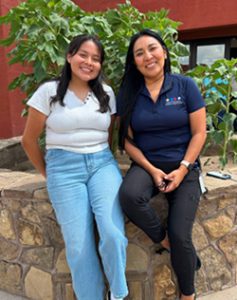 Brooke Damon
Hopi Tribe – Department of Natural Resources, Water Resources Program
Kykotsmovi, AZ
Yá’át’ééh, shí éí Brooke Damon yinishyé. Ta’neeszahnii nishłį, Tsin sikaadnii báshishchíín, Tábaahá dashícheii, dóó ‘Ashįįhíí dashínálí. Hello my name is Brooke Damon, I am of the Tangle People clan, born for the Clamp Tree clan, my maternal grandfather is of the Water Edge’s clan and paternal grandfather is of the Salt People clan. I am entering my final semester at Northern Arizona University majoring in Environmental Sciences with an emphasis in Biology and minoring in Chemistry. During my ITEP internship I was able to work with the Hopi Water Resources Program that is within the Department of Natural Resources. My main focus was on the data management of water quality from spring sites across the Hopi Reservation. I was able to attend site visits of areas that are subject to testing to provide insight and discuss spring restoration projects. I also was able to assist with other projects when needed and participate in different meetings that involved the Hopi Tribes.
 Alexandria Ponce
Northern Arizona University- Cocopah Tribe Project
Yuma (Virtual)
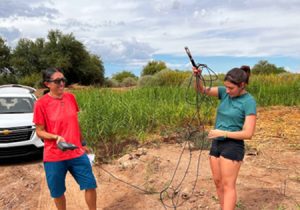
Over the process of my internship, I was able to have a variety of experiences I had never imagined doing. As an anthropology major working with water sampling and learning about things like water treatment was not something I thought I’d ever do, but this internship gave me that chance. My internship focused on learning about the Cocopah Native American Tribe from their history to their relationship with water quality. I alongside my professor, Dr. Armando Medinaceli, are working with a group of environmental engineers to study the water quality on the Cocopah reservation and to make sure every step of this process is handled in the most culturally appropriate way.
The picture on the top left shows me holding a probe that I would toss into the water, and it would read different information on the state of the water. This information will be used to continue telling the tribe about the quality of their water. Later on, that same week I would also be given the chance to see the Mexican border that was placed in the reservation. The picture to the right was taken by me while in the truck that we had driven out there in. You can see to the left of the truck the metal border on the reservation and the wall on Arizona land next to it. Both features that impact the ability of the Cocopah to use and enjoy their own lands. This is all information that introduced me to an important topic, the struggles of reservations cut by a border, that I had never even considered before then. As well as an experience that I would not have had if the Cocopah were not as welcoming as they were or if I had not taken this internship.
 Sydney Wilson
Northern Arizona University- Cocopah Tribe Project
Yuma (Virtual)
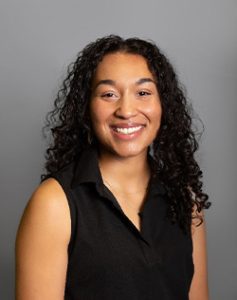
My internship with ITEP water and land was working in Dr. Diana Calvo’s lab at Northern Arizona University. Our project works with the Cocopah Tribe in Yuma, Arizona to assess the community’s current water quality for surfaces water, well water, and tap water. In this project, I worked to assess each water source for ten different water quality parameters. The ten water quality parameters are total nitrogen, total phosphate, chemical oxygen demand, alkalinity, total dissolved solids, dissolved oxygen, turbidity, temperature, conductivity, and pH. This summer my work included assessing the current sample locations for this uses in my project this Fall 2023, connecting with community council members, creating a list of protocols and methodology for sample collection according to source type, and drafting a sample plan to used in the Fall 2023.
My ITEP internship has been one of my favorite summers throughout my undergraduate career. ITEP allowed me to pursue my interests and continue to develop a project I feel connected to too. I was provided the resources I needed to succeed. I would strongly encourage all undergraduate and graduate students to apply for an ITEP internship if they are interested in environmental education or public health. The staff at ITEP supported me every step of the summer.
This fall I will continue my education at Northern Arizona University pursuing a master’s in environmental engineering. I appreciate the funding provided by ITEP to allow me to begin my master’s thesis off to a strong foundation.
 Trisha Lane
Navajo Nation Water Management Branch
Fort Defiance, AZ
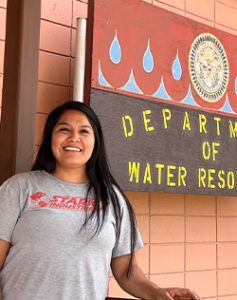
Yá’át’ééh, my name is Trisha Jean Lane. I am an undergraduate at the University of Arizona majoring in Environmental Engineering and minoring in Sustainable Built Environments. I had the pleasure of participating in ITEP’s Land and Water Summer 10-week internship with the Navajo Nation Water Monitoring Inventory (WMI). WMI is a program through the Navajo Nation’s Water Management Branch in Fort Defiance, Arizona.
The program’s primary purpose is to monitor surface waters on the Navajo Nation, including activities such as drought monitoring, precipitation monitoring, climate stations, and stream gauging. The main objectives of the internship host site were to utilize the Drought Severity Evaluation Tool (DSET), an online remote sensing web tool, to apply various evapotranspiration (ET) drought indices for generating remotely sensed reports and explore best practices in utilizing ET as a drought index for the Navajo Nation’s WMI program to assist with drought mitigation processes. As part of the internship, I was able to travel to the different parts of the reservation to gather precipitation data from rain gages in various agencies to assist with the data collection to attribute to the rainwater tables that could be used to create rain precipitation intervals to assist with drought monitoring and mitigation processes.
For the past two years, I have conducted environmental research in laboratories involving chemical properties and data analysis. I enjoyed doing field work and applying my current fluid mechanics and environmental engineering knowledge during the data analysis portion of the internship. Incorporating the skills I learned in my Remote Sensing and Watershed engineering courses made me feel on the right track with my career goal of becoming an Environmental Engineer.
 Erin Begaye
Navajo Nation Water Management Branch
Fort Defiance, AZ
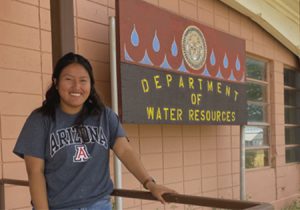
I was able to learn more about environmental issues on the Navajo Reservation and drought-related challenges because of my internship with ITEP. I traveled to various locations on the Navajo reservation for ten weeks while working with the Navajo Nation Water Management Branch to collect precipitation data to gauge the severity of the drought. I performed fieldwork, going to various locations with rain cans to take measurements. Additionally, I had the opportunity to collect precipitation data using the Drought Severity Evaluation Tool (DSET). Along with other interns, I worked with my supervisor, who provided guidance and assistance throughout the duration of our internship.
The pandemic led to numerous changes in the Navajo Nation Water Management Branch. During those times, there was a lot of missing data on precipitation measurements, and the interns, including myself, helped restore the majority of the data. Observing the team and entering precip measurements data into an Excel spreadsheet for tracking purposes were my daily tasks. I had no prior knowledge of precipitation data or rain cans before beginning my internship, but my supervisor taught me everything I needed to know during the brief time I was there. I gained a lot of knowledge about other environmental issues and how they relate to drought from this experience. Since I have no prior experience in the environmental field, my internship was an amazing chance to learn. I would advise anyone, regardless of background, to apply for this internship, to take advantage of the chance to learn more about the problems that tribal communities face. In order to address these issues, this program has further motivated me to pursue a career working with indigenous communities.
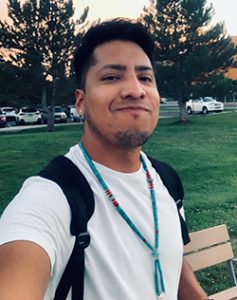 Zachary Beaver
Navajo Nation Department of Water Resources
Fort Defiance, AZ
My name is Zach and I am a Civil Engineer major at Northern Arizona University. After I graduate, I would probably like to attend graduate school at NAU. Ultimately, I would like to be a civil engineer on/off the Navajo reservation. The reason why I said “off the reservation” is to gain outside experience, but also to make relations with companies, organizations and people. A partnership amongst our neighbors is important. I am currently working with a hydrologist with the Navajo Nation Department of Water Resources (NNDWR) and I have learned so much information! I am looking towards an amazing future and I wish everybody well in their academic and professional endeavors. Ahehee’.
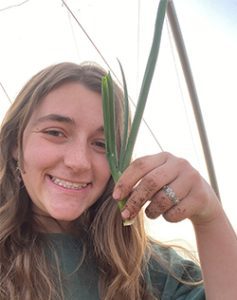 Caroline Reed
Cocopah Tribe
Northern Arizona University
My name is Caroline Reed, I am studying environmental engineering at Northern Arizona University. I spend a lot of times outdoors hiking, biking, climbing, and most anything else I can try. I also spend a lot of time in the garden, whether helping with maintenance or harvesting. I love cooking and baking, especially cinnamon rolls. I also love learning new things about language, so spend a lot of time doing word puzzles and reading.
As an environmental engineer, I hope to graduate with the knowledge to help with ensuring sustainable solutions for water engineering. I plan to stay for a masters of engineering at NAU, and hope that by completing a thesis I will become more aware of different water quality issues surrounding the state. Professionally, I hope to focus my work on water, specifically the conservation of water.
Through ITEP, I will be working with the Cocopah Tribe in southwestern Arizona to research their water quality. With this research, I will primarily focus on the microbial aspect of the drinking water.
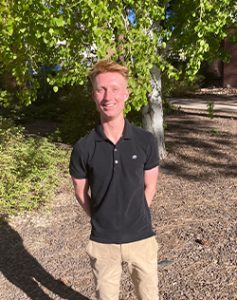 Matthew Helms
Cocopah Tribe
Northern Arizona University
Matt Helms is a Northern Arizona University Student studying environmental engineering and chemistry. Matt is from Napa, California, he enjoys backpacking, skiing across the West, and long-distance running. He is currently involved in a research project at NAU in collaboration with a local Native American tribe, under the supervision of Dr. Diana Calvo. This project focuses on assessing the tribe’s water quality. His specific focus of this project is to determine the Nitrogen, Phosphorus, and Potassium nutrient concentrations and examine the microbial ecology of the water. Matt is planning on going on to graduate studies with a focus on water quality, microbial ecology, and nutrients in aquatic environments.
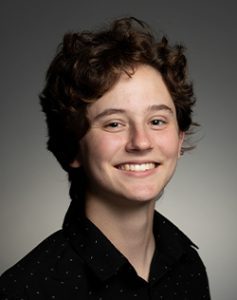 Nick Dawson
Cocopah Tribe
Northern Arizona University
Hello there! I am Nick Dawson, and I am a third year student at NAU studying Environmental Engineering and Mathematics. I am currently working with Dr. Calvo to assess the water quality of the water in underserved areas. When I graduate, I would love to work in water treatment so I am very happy to have the opportunity to learn more about water quality parameters and testing.