

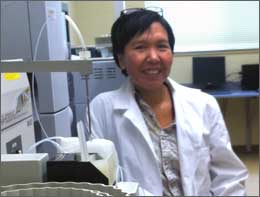
 Josie is of Lummi and Yupik descent. Born in Anchorage, Alaska, she spent her school years in Alaska, and her summers in Lummi, Washington. She graduated for the Northwest Indian College with a Bachelor’s of Science-Native Environmental Science in June, 2016. From there, she began as a Master’s of Professional Science-Climate Science and Solutions major at Northern Arizona University. She will graduate spring semester, 2018.
Josie has broad experience in environmental science and education. She has monitored watershed restoration tree growth rate, assisted in planning wetlands restoration structure, assisted in soil survey mapping, performed marine biotoxin research, calculated CO2 uptake in restored wetlands, performed administrative work for a Tribal AmeriCorp program, done science educational outreach in science fields for primary education, and tutored college students in mathematics and sciences. Her experience as a volunteer, federal or tribal employee, and work in schools give her a foundation that allows for communicating science to tribal people, and tradition and culture to the scientific community.
Josie’s heritage of Lummi and Yupik descent have given her understanding of the need for multi-culture and diversity. Many solutions to life problems have been presented from traditional values instilled by her grandmothers and families from her tribal communities. She recognized similar values in the schools environmental and climate science and pursued those studies. She plans to use her Climate Science and Solutions degree to further improve people’s ability to protect and preserve the natural world by reducing the rate of climate change.
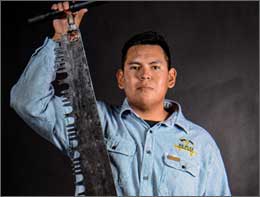 Chad Brown hails from the proud tribes of Santo Domingo Pueblo, Santa Clara Pueblo, and the Navajo Nation in New Mexico. He graduated high school from Santa Fe Indian School in Santa Fe, NM. He is currently attending Northern Arizona University and entered in their distinguished Bachelor of Science program in Forestry. In the bachelors forestry program he is focused on obtaining a Fire Ecology and Management certificate. Chad is a non-traditional student and had worked full time for the Santa Clara Pueblo Forestry Department. Working for the tribe has fueled his decision to return to education after realizing his passion for environmental and forest stewardship. He is also a student trainee (forestry) for the BIA TREES Pathways program, which provides him a means to work for Indian country after graduation.
Organizations and clubs Chad is associated with at NAU are the Student Association for Fire Ecology (SAFE), Forestry Club, and the Logging Sports team. Participation on his logging sports team has earned him 1st, 2nd, and 3rd place awards in several events at two competitions he has attended. At these competitions he has helped earn both 3rd at the University of Montana and recently a 1st place overall team award at Cal Poly State University.
His overall goal is to continue his career in Forestry that involves: teaching the importance of maintaining the health and vigor of the forest to my community, developing cultural appreciation and identity to our forests, writing grants and securing funding for environmental stewardship, writing silviculture prescriptions, and participating in professional restoration efforts. All these skills he wishes to bring back to his tribe. He strives to one day become a silviculturist for his tribe to fulfill the many responsibilities as a steward of the forest.
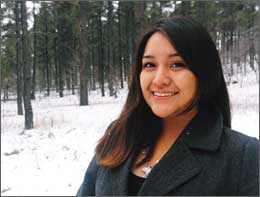
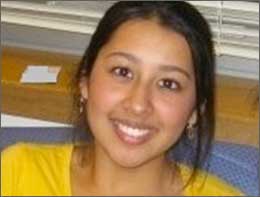 Riley Smith is a graduate student in the biology program at Northern Arizona University. She is originally from the San Francisco Bay Area in California and is Shoshone from the Shoshone-Bannock Nation at Fort Hall. Riley graduated from San Francisco State University with a double major in ecology (B.S.) and Native American Studies (B.A.). In 2014, Riley became a student at NAU to pursue a degree in environmental health.
Currently, Riley’s studies focus on water quality, ecotoxicology, and environmental endocrinology. In the graduate program, she focuses on how local water contaminants, like waste water effluents, pesticides, and heavy metals, may act as endocrine disrupting chemicals (EDCs) that affect health outcomes. Her interests lie in learning about how natural or synthetic chemicals impact wildlife and community health; she is also really interested in learning about Indigenous solutions to health issues from toxins. To work toward solutions, it is important to support the restoration of traditional ecological knowledge (TEK) and incorporate the healthy practices of TEK from local Indigenous peoples.
To learn more about the possible threats and solutions for chemical exposures in Tribal communities, Riley has worked with ITEP’s Tribal Waste and Response Assistance Program (TWRAP). Through this experience, she has participated in community outreach, professional development trainings, and conferences that center on hazardous waste education, assessments, and solutions for Tribes. She assisted in editing the National Tribal Toxics Council’s report, “Understanding Tribal Exposures to Toxics,” which assessed chemical exposure risks that exist through Tribal life-ways. She has learned a lot from her experiences at ITEP and NAU and strives to continue to support community health and cultural preservation in Native communities.
 My name is Darrien Benally, I am a member of the Navajo tribe. I was born and raised in Flagstaff, Arizona. I transferred to NAU from Coconino Community College to peruse a bachelor’s of science degree in Applied Indigenous Studies with a minor in Environmental Sustainability.
Currently I am a sophomore, I hope to become an Environmental Educator when I am graduated. It is important to educate Native Americans tribes’ people on the effects of climate change as well as how to best adapt for their environment. The protection of natural resources for Native American tribes is imperative to educate on because there is a need to protect water rights, and the rights to gather as well as where to gather herbal medicines.
Currently I do a lot of work involving mental health with a group called Native Americans for Community Action (NACA) located in Flagstaff, AZ. I believe it is important to understand the dynamic issues Native American tribes face today. Mental health, spiritual health, physical health, and social wellness are all interconnected. To preserve our overall health, we need to take care of our environment which sustains various forms of life, from the water we drink to the food we consume. As indigenous peoples, it is important that we are educated using our own traditional ecological knowledge to understand climate change and work towards building more sustainable communities by combining western knowledge with traditional knowledge.
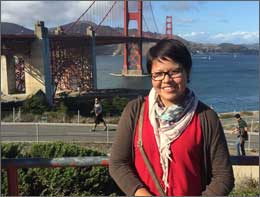 Mariah is a member of the Navajo Nation from Chichiltah, New Mexico. She graduated high school in 2010 from Santa Rita in Tucson, Arizona. She then attended Dine’ College in Tsaile, Arizona and received an Associate of Science (A.S.) Degree in 2013. From there she transferred to Northern Arizona University where she is currently attending and studying Environmental Science with a Geology emphasis. She aspires to graduate in spring of 2016.
Mariah has been involved in numerous community outreach programs such as the Land Grant Office in Tsaile, Shonto Energy Corporation in Kayenta and Rez Refuge in Fort Defiance, Arizona. Among these community involvements, Mariah stresses the importance of cultural significance and environmental sustainability. She believes that incorporating indigenous cultural knowledge with western scientific methods is key to combating today’s environmental issues. Her long-term goal includes returning to the Navajo Nation to help the people and her community create a more sustainable environment for future generations.
Currently, Mariah is a part of NAU’s Remote Sensing and Geoinformatics Lab mentored by Dr. Temuulen “Teki” Sankey. She’s funded through the National Science Foundation (NSF), Undergraduate Research and Mentoring (URM) Program. Much of Mariah’s work has focused on Landsat image processing for snow distribution analysis, Geospatial Information Systems (GIS), and working with the United States Geological Survey (USGS) in studying erosion rates in the Grand Canyon. Mariah also performs field measurements for the lab’s research projects, while learning and gaining valuable experience with geospatial techniques. Upon graduation, she seeks to attend graduate school and receive a Master’s Degree in Remote Sensing and Geospatial Information Systems (GIS).
More information:
https://sites.google.com/a/nau.edu/remote-sensing-lab/people
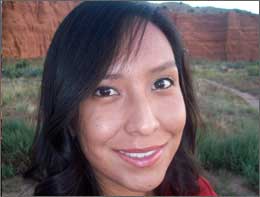 Dawnylle M. Smith is a Northern Arizona University alumnus with a bachelor’s degree in biology and a minor in chemistry. She is a Diné woman who worked with young Navajo high school students in her hometown of Ganado, Arizona as an educator. Currently, she is attending NAU as a Climate Science and Solutions Professional Science Masters student with an anticipated graduation date of December 2016.
Dawnylle’s career ambitions involve the study of wildlife indicator species to determine the climate change impacts on ecosystems located on Native American reservations. She wishes to effectively communicate climate-related issues to decision makers and indigenous communities with respect to the preservation of traditional knowledge and practices. Collaborations with tribal communities, scientists, government agencies, and research organizations would be of the utmost importance to identify mitigation and adaptation solutions to the consequences of climate change.
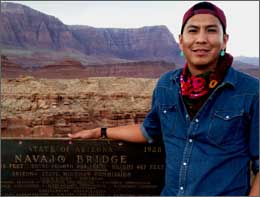 Deon Ben is a member of the Navajo Nation from the community of Tohatchi, NM. He is working on completing his Masters of Science in the school of Environmental Science & Policy with an emphasis on incorporating Traditional Ecological Knowledge (TEK) into Navajo community land use planning to address climate challenges and applications.
Deon comes from a long line of ranchers, which has provided him the foundation for his future career goals on working on conservation planning for grazing management in Navajo communities with climate change applications. He plans to return to the Navajo Nation and work in his community and his father’s community on grazing applications that would incorporate TEK to best provide outlet opportunities for their existing stressful grazing conditions. Deon also looks to develop a template curriculum for Navajo ecological knowledge to revitalize historic Navajo teachings surrounding land stewardship.
“My ultimate goal is for communities to include TEK into future grazing practices that would best provide a sufficient outlet to addressing climate challenges while simultaneously providing an avenue for Navajo teachings for future generations in relation to Navajo animal husbandry and grazing practices.”
Deon will be completing his MS degree in 2016 and is currently serving on the Tohatchi Community Land Use Planning Committee and is incorporating his educational and TEK studies experience. He plans to begin his political career in the coming years by running for Tohatchi Chapter President and soon to serve his Navajo people by becoming an elected Legislative Council Delegate.
“The importance of address our environmental concerns is overdue and it is eminent that young experienced Native Americans return to their Nations and become practical players in decision making and leadership; we talk about our future in so many components but we have to come to the realization that the future is the present.”
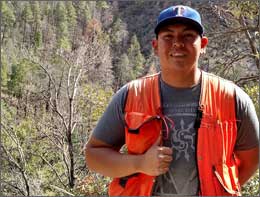 Chad Brown hails from the proud tribes of Santo Domingo Pueblo, Santa Clara Pueblo, and the Navajo Nation in New Mexico. He is a transfer student from New Mexico attending Northern Arizona University (NAU) and is pursuing a Bachelor’s of Science in Forestry. His focus in the forestry program is the Fire Ecology and Management certificate. Organizations and clubs he is associated with are the BIA TREES PATHWAY Program and NAU’s Student Association for Fire Ecology (SAFE). He is a non-traditional student and has worked full time for the Santa Clara Pueblo Forestry Department for two and a half years prior to attending NAU. Working for a tribal forestry department fueled his decision to return to education after realizing his passion in environmental and forest stewardship. Influences from the leadership in the Santa Clara Pueblo Forestry Department have inspired him to choose his current career and higher education paths.
Mr. Brown’s overall goal is to continue a career in forestry that involves: teaching the importance of maintaining the health and vigor of the forest to Native communities, developing cultural appreciation and identity to our forests, writing grants and securing funding for environmental stewardship, writing silviculture prescriptions, and participating in professional restoration efforts. He wishes to bring back all of these skills to his community one day. An important aspect of his goal is to be able to mentor and guide those who share an interest in the natural sciences and forestry disciplines in the way Santa Clara has done for him.
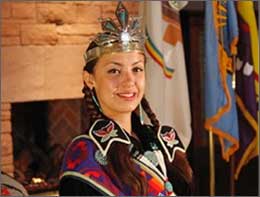 Erin O’Keefe, a Northern Arizona University (NAU) student, from Gallup, NM is Dine of the Water That Flows Together clan born for the Anishinaabe Eagle clan. She has a BA degree in Applied Indigenous Studies (AIS) and a BS in Communication Studies from NAU, and is currently working on a Master’s in Sustainable Communities at NAU.
Erin has demonstrated her interest in supporting tribal environmental issues through a variety of activities, including membership in several student clubs. Erin was a student intern at the Landsward Institute and represented the university as Miss Indian NAU. Student clubs include Connecting Higher Education Indigenously (CHEI) Club, a student organization that serves as a part of the Applied Indigenous Studies (AIS) program, and the Weatherization and Community Building Action Team (WACBAT), which offer education to students interested in helping the environment. Erin has also been a Site Facilitator for the Public Achievement program, which works with high school students at local high schools to address important community environmental issues.
Erin’s educational program and extracurricular activities support one of Erin’s career goals, which is working with Native American youth back on her reservation and educating them in environmental sustainability.
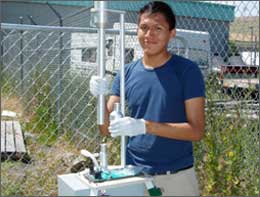 John is a sophomore at Northern Arizona University studying Environmental Science applied Geology.
John is from Ganado, AZ, which is located on the Navajo Reservation. John has interned with the Nez Perce Reservation where he conducted outreach on environmental issues. He is currently an intern with the Navajo Nation Water Management Program in Ft. Defiance, Arizona.